Choosing an LED aluminum profile is not only about whether an LED strip fits inside the channel.
The depth and width of the profile can also affect how the finished light looks.
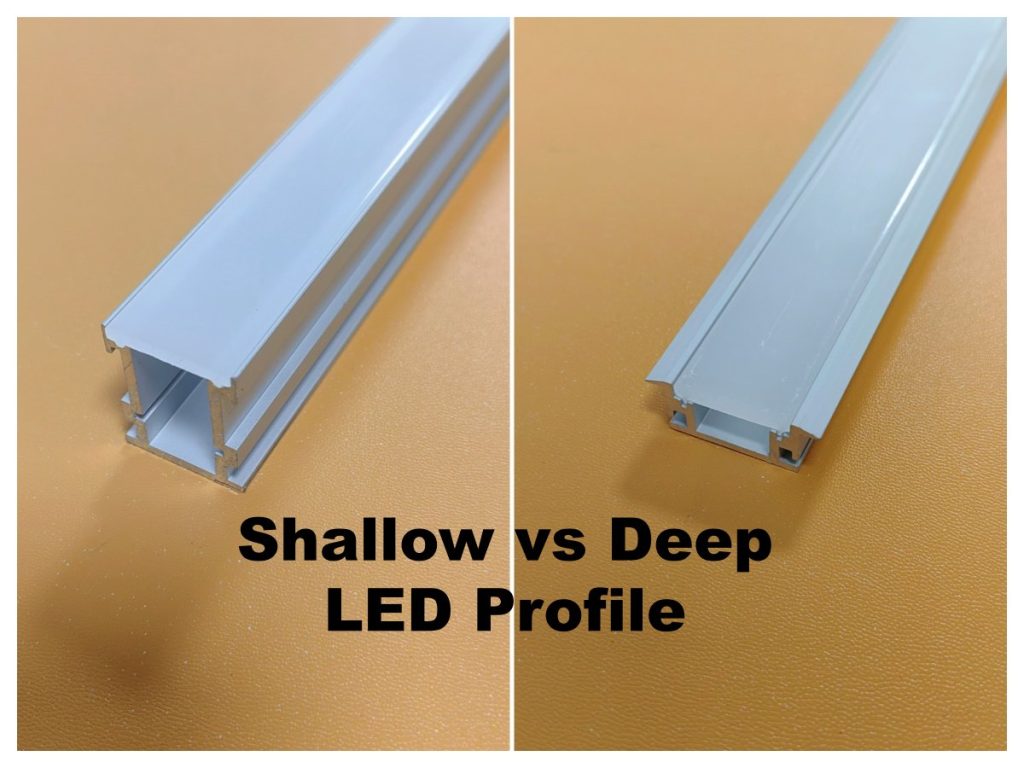
The distance between the LED strip and diffuser influences how much the individual LED sources blend before the light reaches the visible surface. A shallow profile may produce a more direct and visually intense appearance, while a deeper profile can provide more optical mixing and reduce visible LED points.
However, deeper is not always better.
The final result depends on the combination of:
- profile depth
- profile width
- LED spacing
- LED density
- diffuser type
- installation position
- viewing distance
This is why the profile and LED strip should be evaluated as one lighting system.
Why Does Profile Depth Affect LED Hotspots?
An LED strip is made up of individual light sources.
With a conventional SMD strip, the LEDs are separated by a certain distance.
If the diffuser is very close to the LEDs, there is less space for the individual light sources to blend together.
This can make the LED points more visible:
LED → short distance → diffuser
With a deeper profile, the LED-to-diffuser distance increases:
LED → longer optical distance → diffuser
The additional distance allows the light from neighboring LEDs to overlap more before reaching the diffuser.
As a result, a deeper profile can help create a smoother and more continuous appearance.
This relationship is widely recognized in LED profile design: profile depth, LED pitch and diffuser characteristics all contribute to hotspot visibility.
Shallow Profiles Are Not Necessarily Worse
A shallow profile can still be the right choice.
In many applications, the goal is not to create a perfectly homogeneous light line.
A shallow profile can provide:
- a compact installation
- lower overall height
- less installation depth
- a more direct visual output
- easier integration into furniture or limited spaces
Wide, shallow profiles are also commercially available for architectural, cabinet, floor and furniture applications, showing that shallow geometry is an intentional design choice rather than simply a compromise.
The important question is therefore not:
Is a deeper profile always better?
Instead, ask:
How uniform does the finished light need to be, and how much installation depth is available?
Profile Depth and LED Density Should Be Considered Together
Profile depth alone cannot guarantee a dot-free light.
For example, a low-density LED strip can still show individual LEDs in a shallow profile even when a diffuser is used.
A higher-density SMD strip or COB strip can produce a much more continuous appearance with the same profile.
In general:
| LED source | Shallow profile | Deeper profile |
|---|---|---|
| Low-density SMD | Higher risk of visible dots | Better mixing |
| High-density SMD | Better | Smoother |
| COB LED strip | Usually good | Very smooth |
The exact result depends on LED pitch, diffuser transmission and viewing conditions.
This is why a profile should not be specified independently from the LED strip.
Narrow and Deep vs. Narrow and Shallow Profiles
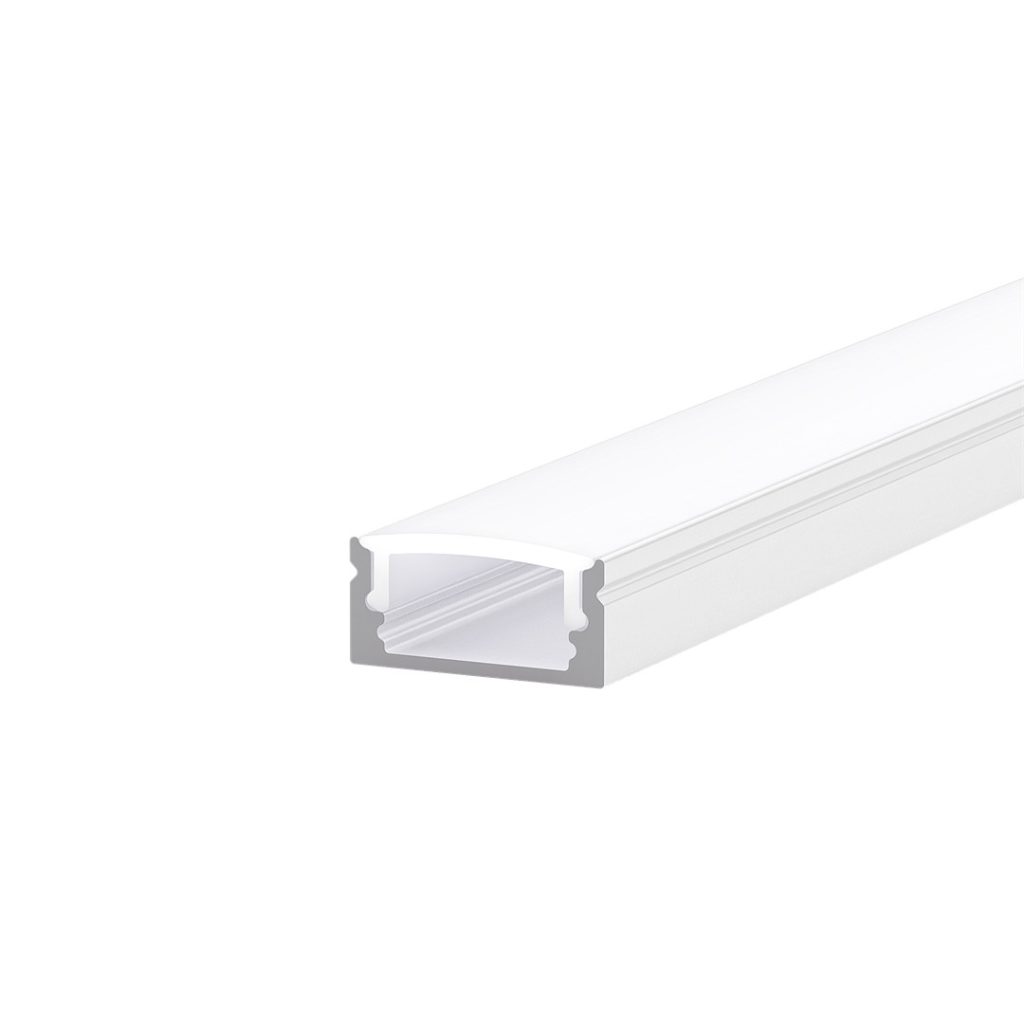
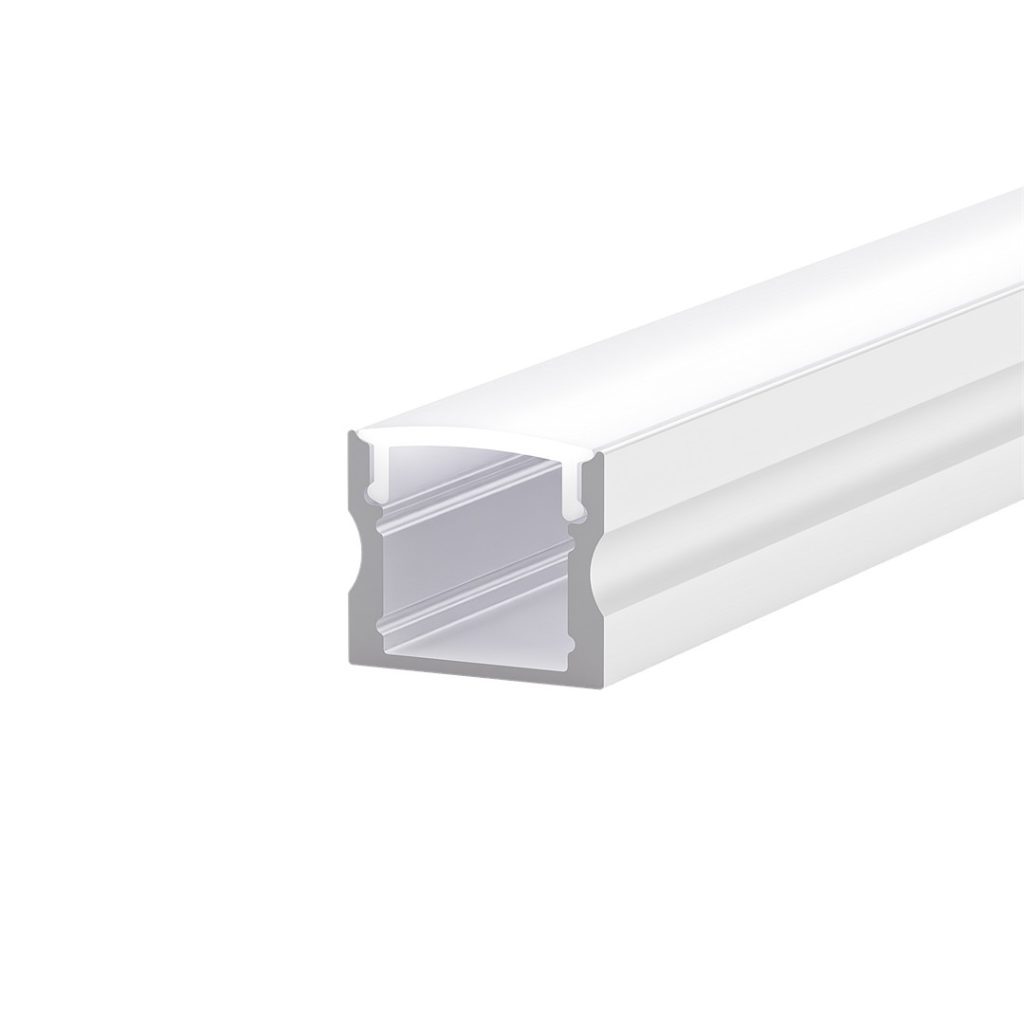
One useful way to understand profile geometry is to compare profiles with similar widths but different depths.
For example, a compact profile around 17 × 8 mm has a much shorter optical distance than a similar-width profile around 17 × 15 mm.
The shallow version can be useful when:
- installation space is limited
- a compact profile is preferred
- the LED source is relatively dense
- some LED point visibility is acceptable
The deeper version provides more space between the LED strip and diffuser and can be a better choice when a smoother appearance is required.
The same principle applies to wider profiles.
A profile around 23 × 8 mm and one around 23 × 15 mm can have a similar relationship: increasing depth provides more optical distance without necessarily requiring a substantially wider installation.
These are examples of profile geometry rather than fixed rules. LEDLINEA offers different profile sizes for different lighting and installation requirements.
Width and Depth Solve Different Problems
It is easy to assume that a wider profile will automatically produce smoother lighting.
It does not.
Profile width mainly affects:
- the available light-emitting area
- how the light source is distributed across the channel
- whether multiple LED rows can be used
- the visual width of the linear light
Profile depth mainly affects:
- LED-to-diffuser distance
- optical mixing
- LED point visibility
- available space for the LED assembly
- heat-spreading capacity of the aluminum body
This means:
A wider profile is not automatically a better profile, and a deeper profile is not automatically a brighter profile.
The light source needs to be distributed appropriately within the available space.
This is also why wide-and-shallow profiles exist as a separate product category in architectural lighting.
A Wider Profile Can Still Show LED Points
This is an important point for lighting designers and installers.
Imagine a wide profile with one relatively narrow LED strip positioned in the center.
The profile may be 30, 40 or 50 mm wide, but the LED source is still concentrated in one narrow area.
Making the aluminum body wider does not automatically spread the light across the entire diffuser.
For wider profiles, the light source may need to be appropriately distributed using:
- wider LED strips
- multiple LED strips
- multiple LED rows
- a suitable diffuser
- an appropriate installation position
This is why large architectural profiles should be evaluated as a complete lighting assembly rather than simply by their outside dimensions.
LEDLINEA’s existing profile range includes wider architectural profiles from around 35 mm to 50 mm and above for applications requiring broader or multiple light sources.
What About Floor Profiles? Shallow vs. Deep
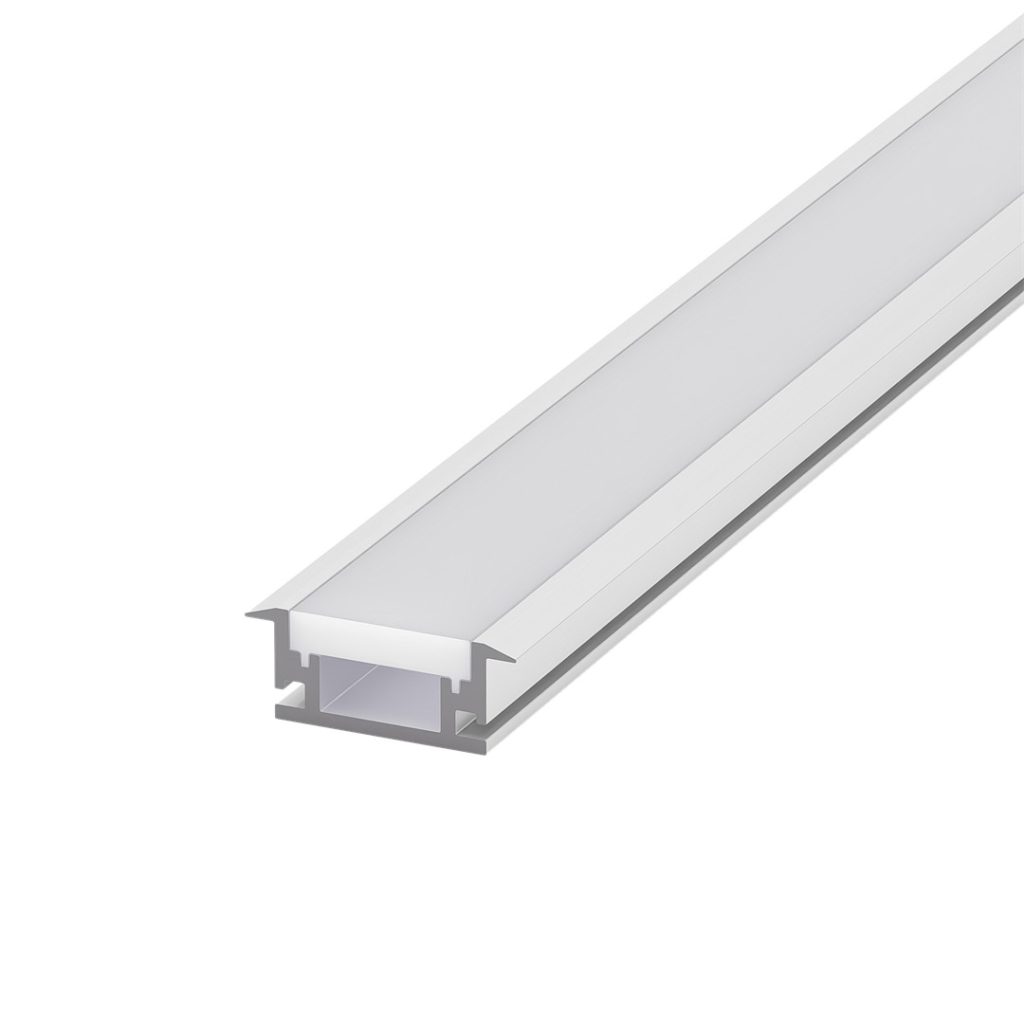
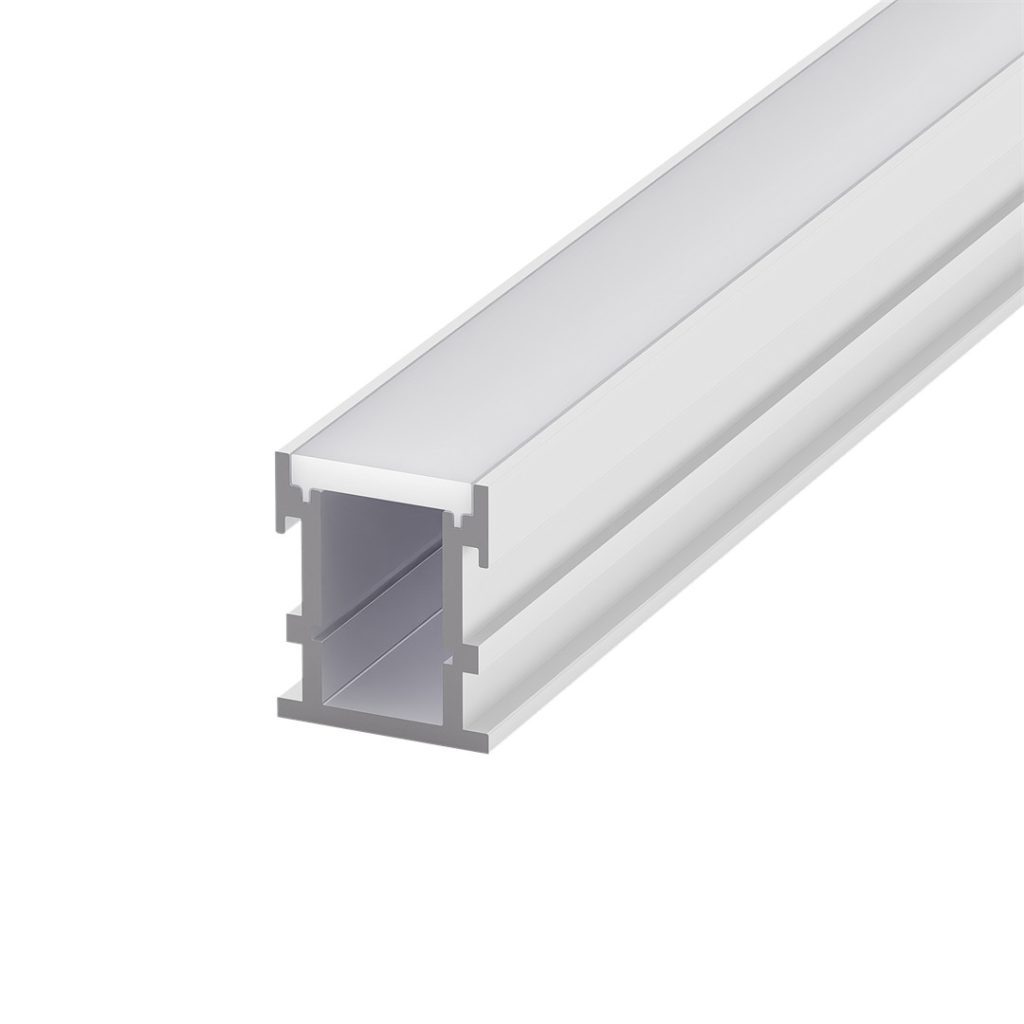
Floor lighting is a good example of why profile depth cannot be judged only by optical performance.
A shallow floor profile such as 27 × 11 mm AL109 can be useful where installation depth is limited.
A deeper floor profile such as 21 × 26 mm AL042 provides considerably more internal depth and aluminum structure, making it suitable for applications where a deeper recessed installation is acceptable.
The two profiles therefore serve different installation requirements.
Shallow floor profile
Advantages may include:
- less required recess depth
- easier integration into certain floor constructions
- compact installation
- shorter LED-to-diffuser distance
Deeper floor profile
Advantages may include:
- greater optical distance
- more room for light mixing
- larger aluminum body
- more substantial recessed construction
- suitability for applications requiring a deeper floor channel
AL042 is currently specified by LEDLINEA as a 21 × 26 mm recessed floor profile with a thickened aluminum channel for indoor and outdoor ground linear lighting. AL109 is a 27 × 11 mm floor LED profile for IP67 LED strip lighting.
The deeper profile should not automatically be considered the better choice. The appropriate option depends on the available recess depth, mechanical requirements, desired appearance and LED strip.
Does a Deeper Profile Produce Less Light?
Not necessarily.
It is important to distinguish between total light output and perceived brightness or local intensity.
A shallow profile may appear more intense because the LED source is closer to the diffuser.
A deeper profile may distribute the light over a larger area and produce a softer, more blended appearance.
This does not mean that the deeper profile automatically produces substantially lower total light output.
Actual optical performance depends on:
- diffuser transmission
- internal reflections
- LED strip efficiency
- LED pitch
- profile geometry
- viewing angle
Therefore, without photometric testing, it is better to describe the difference as light distribution and visual appearance, rather than claiming that one profile produces a specific percentage more light.
Our Practical Observation: Different Depths Can Create Different Visual Effects
When comparing profiles with different depths using conventional LED strips, a shallow profile can produce a more direct and visually intense appearance.
However, when LED spacing is relatively large, individual LED points may remain visible.
A deeper profile gives the light more distance to mix before reaching the diffuser, which can produce a softer and more blended appearance.
This is a visual observation rather than a photometric measurement.
The actual result will vary with the LED strip, LED spacing, diffuser and installation conditions.
This distinction is important when selecting a profile for a commercial or architectural lighting application.
The Diffuser Is Part of the Optical System
The profile body is only one part of the solution.
A diffuser can significantly change the final appearance.
Clear diffuser
Provides more direct light transmission and can preserve a stronger visual output, but it also makes LED points and installation imperfections easier to see.
Frosted or milky diffuser
Scatters the light and can reduce visible LED points, creating a softer appearance.
However, diffusion can also reduce transmitted light and change the beam distribution.
Therefore:
Profile depth + LED density + diffuser type should be evaluated together.
This is consistent with current LED profile selection guidance: the combination of optical distance, LED pitch and diffuser is more important than any single dimension.
Does Every Application Need Completely Dot-Free Lighting?
No.
This is an important distinction.
A decorative floor line, cabinet accent or concealed indirect light does not necessarily have the same uniformity requirements as a highly visible architectural linear fixture.
For some applications, a small amount of LED point visibility may be acceptable.
For others, especially when the diffuser is viewed at close range, a continuous light line may be much more important.
Consider:
- viewing distance
- viewing angle
- lighting purpose
- surrounding surfaces
- required visual quality
- LED density
- profile depth
A profile should therefore be selected according to the required lighting effect, rather than simply trying to eliminate every visible LED point.
A Practical Profile Selection Guide
| Lighting requirement | Profile direction |
|---|---|
| Limited installation depth | Shallow profile |
| Compact cabinet or furniture lighting | Narrow, shallow profile |
| Smoother appearance with conventional SMD | More profile depth |
| Continuous light line | Higher LED density + suitable depth + diffuser |
| Wider luminous surface | Wider profile with properly distributed light source |
| Multiple LED rows | Wider profile |
| Floor installation with limited recess depth | Shallow recessed floor profile |
| Deeper recessed floor installation | Deeper floor profile |
| High visual uniformity | Evaluate depth, LED pitch and diffuser together |
There is no universal profile size that produces the best result for every LED strip.
The Best Way to Choose an LED Aluminum Profile
Instead of selecting a profile based on dimensions alone, consider the complete lighting system:
Lighting effect
↓
Required light-emitting width
↓
Available installation depth
↓
LED strip / LED density
↓
Profile geometry
↓
Diffuser
↓
Final visual test
For professional lighting applications, testing the actual LED strip, profile and diffuser together is often the safest way to confirm the final appearance before larger quantities are ordered.
Conclusion
LED aluminum profiles are more than housings for LED strips.
Profile width and depth are part of the lighting design.
A shallow profile can be the right choice when installation depth is limited or a more direct appearance is desired.
A deeper profile can provide more optical distance and help reduce visible LED points.
But neither is universally better.
The final result depends on the relationship between:
profile depth + profile width + LED density + diffuser + installation environment.
Need LED Profiles for Your Application?
For small quantity evaluation and product testing:
Visit LEDLINEA Shop:👉 [Insert Link: https://shop.ledlinea.com/]
For custom requirements, larger quantities and professional support:
Contact LEDLINEA:👉 [Insert Link: https://ledlinea.com/contact-us/]