
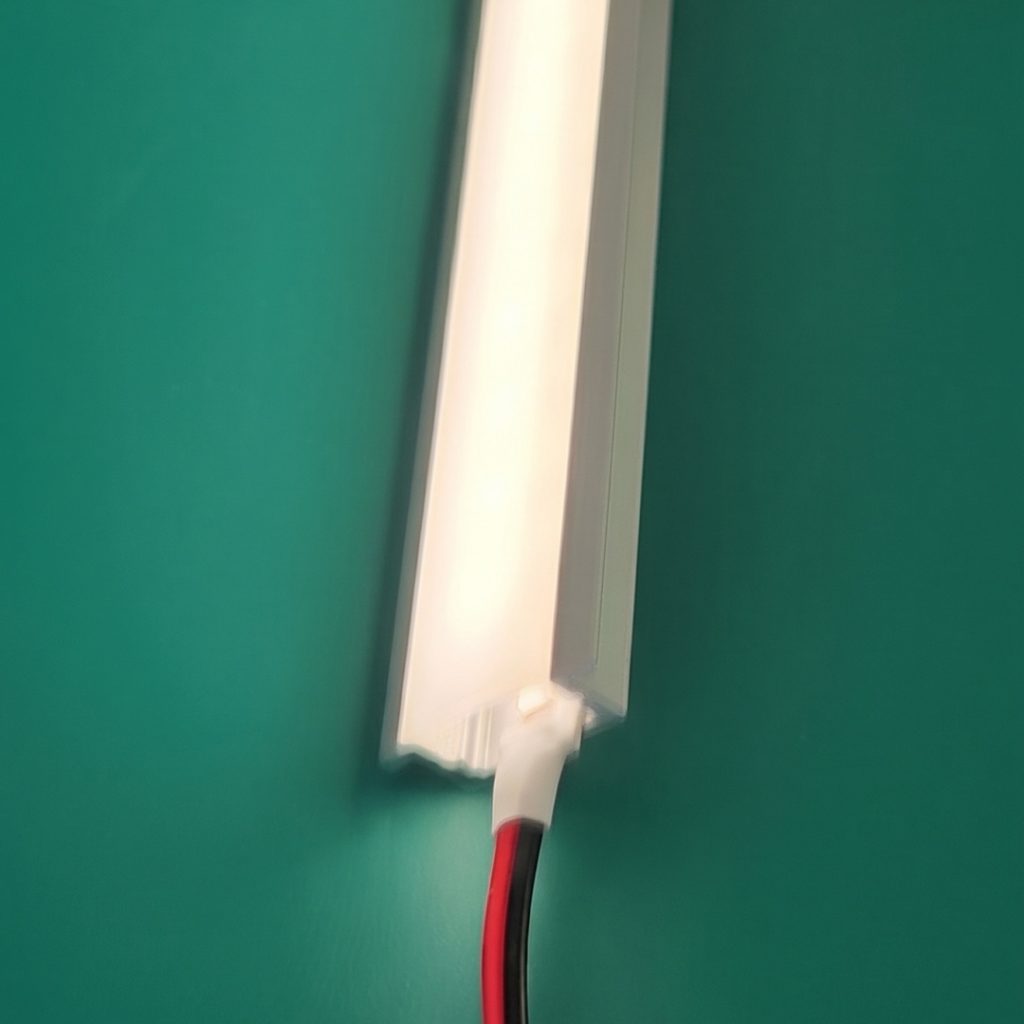
Choosing the right LED aluminum profile is not simply about finding a channel that fits an LED strip.
For project-based linear lighting, it is often better to start with the desired lighting effect and light-emitting width, then choose a suitable profile from the available sizes and match it with an appropriate LED strip and diffuser.
The profile and LED strip do not always have to be selected in a fixed order. They are two parts of the same lighting system, and the right combination depends on the final lighting effect.
Instead of asking:
“Which profile fits my LED strip?”
Start with:
“How wide should the light-emitting area be, and how should the light source be distributed?”
Start With the Desired Light-Emitting Width
The first consideration should be the final appearance.
Do you need a narrow continuous line of light, a wider luminous surface, or a broad architectural lighting effect?
Once the desired light-emitting width is clear, you can compare suitable profile sizes and consider how the light source should be distributed inside the profile.
As a general reference:
| Profile Internal Width | Typical LED Strip Configuration |
|---|---|
| Under 18mm wide | Usually suitable for a single-row LED strip |
| Around 23–25mm wide | Suitable for two-row LED strips |
| Around 30–35mm wide | Suitable for two-row LED strips or two separate LED strips |
| 50mm+ wide | Can accommodate two- to three-row LED strips or multiple LED strips |
These are practical reference ranges rather than strict rules. The actual configuration depends on the profile design, LED strip type and required lighting effect.
A wider profile does not automatically produce better lighting. The light source should be distributed appropriately across the available width.
Profile Depth Affects LED Point Visibility
Profile depth is another useful characteristic when comparing available profiles.
A deeper cavity provides more distance between the LED source and diffuser, giving the light more room to mix.
When the profile depth is under about 10mm, a conventional LED strip may show more visible LED points, depending on the LED pitch and diffuser.
When a more continuous appearance is required, COB or high-density LED strips can be considered.
Example: Shallow Profile + Conventional LED Strip
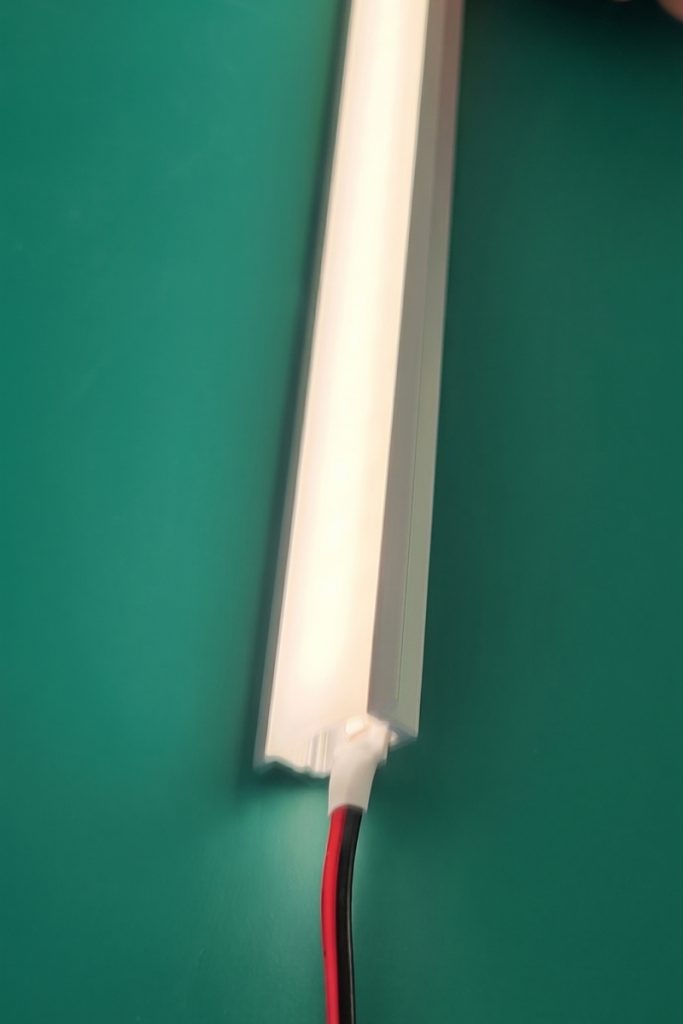
Visible LED points may occur when a conventional LED strip is used in a shallow profile.
For a narrow profile with around 13–15mm or more depth, a conventional single-row LED strip generally has more space for light mixing, making individual LED points less noticeable.
This does not mean shallow profiles are unsuitable. The final result depends on the combination of profile depth, LED density, diffuser, surface finish and application.
Avoid Using a Wide Profile With Only One Narrow Light Source
A wide profile does not necessarily need a single wide LED strip, but it does need an appropriate light-source distribution.
For example, if a wide profile is paired with only one narrow LED strip in the center, much of the available diffuser width may remain unused.
For wider profiles, consider:
- Two-row LED strips
- Two separate LED strips
- Multiple LED rows
- Wider LED boards or custom light sources
The goal is to create a broader and more evenly distributed light source, rather than simply using the largest profile available.
Cove and Indirect Lighting Need a Different Approach
For cove and indirect lighting, the most important consideration is not simply whether individual LED points are visible.
Instead, consider:
- How wide should the illuminated area be?
- How far is the light source from the wall or ceiling?
- How much brightness is required?
- What direction should the light travel?
- How should the light source be distributed?
In these applications, the aluminum profile helps position and distribute the light source.
The final result is also strongly influenced by the reflective surface, installation distance and light output, so the profile should be evaluated as part of the complete lighting design.
Consider the Diffuser and Profile Finish
The diffuser plays an important role in the final appearance.
Depending on the LED strip and profile depth, it can help reduce visible LED points and create a softer, more uniform light.
The profile finish can also affect how the light is perceived. Compared with highly reflective aluminum surfaces, matte powder-coated finishes generally produce less strong secondary reflection from the LED source.
This can be useful when a cleaner visual appearance is required.
The diffuser, LED density, profile depth and surface finish should therefore be considered together rather than individually.
Conclusion
Choosing an LED aluminum profile is not just a matter of matching dimensions.
Start by defining the desired lighting effect and light-emitting width, then compare suitable profile sizes and consider how the light source should be distributed inside the profile.
The final combination of aluminum profile + LED strip + diffuser should be selected according to the application and the desired appearance.
A well-matched combination can provide a more balanced, continuous and professional linear lighting effect than simply choosing a profile based on whether an LED strip can physically fit inside it.