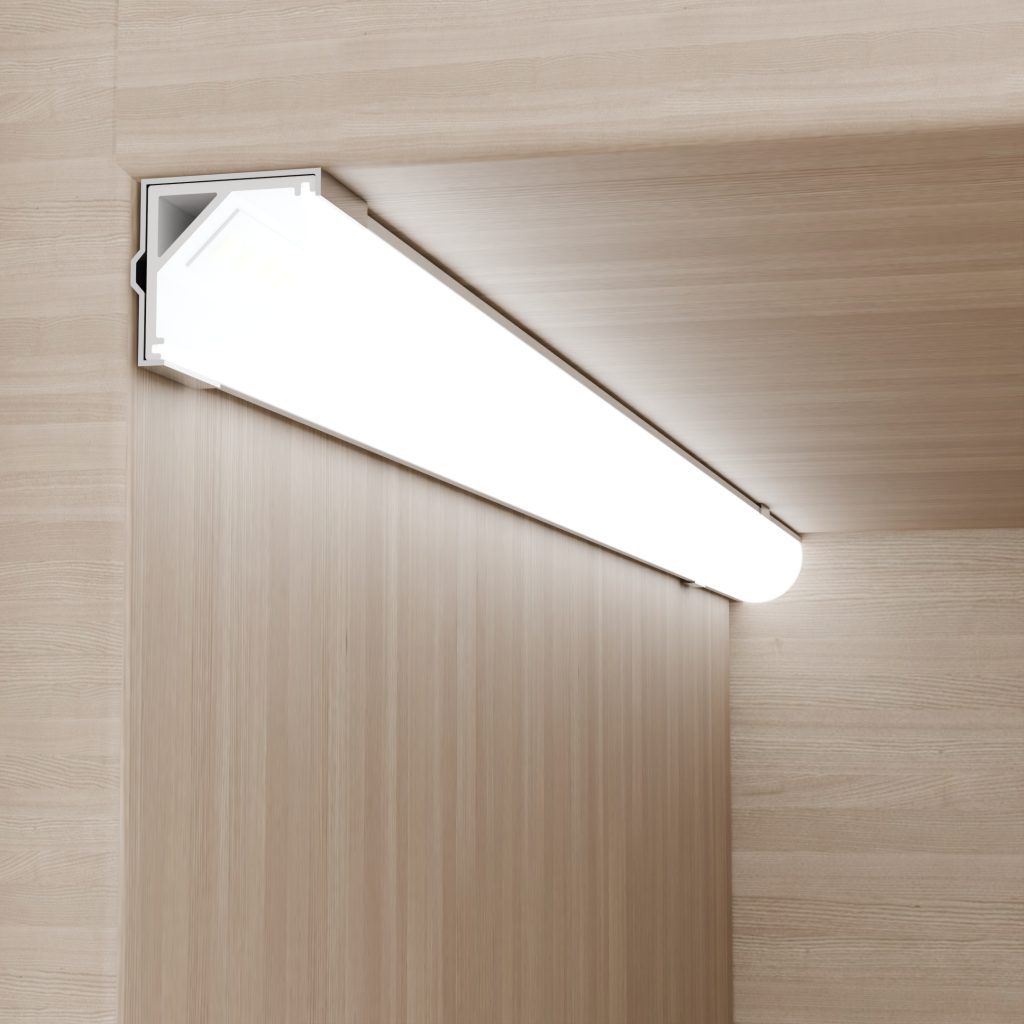
LED corner profiles help integrate linear lighting into corners, cabinets, shelves and architectural details. However, not every corner profile produces the same visual effect or suits the same installation.
Some feature a curved diffuser for a softer appearance, while others use a flatter or more angular diffuser for a defined lighting line. Recessed angled profiles offer another option when a compact installation and directional light are important.
So, which LED corner profile should you choose?
The answer depends on four main factors: the shape of the diffuser, the mounting method, the available space for the LED strip, and the direction in which the light needs to travel.
In this guide, we compare curved, square and angled LED aluminum profiles to help buyers understand the differences in profile design, installation requirements and lighting applications.
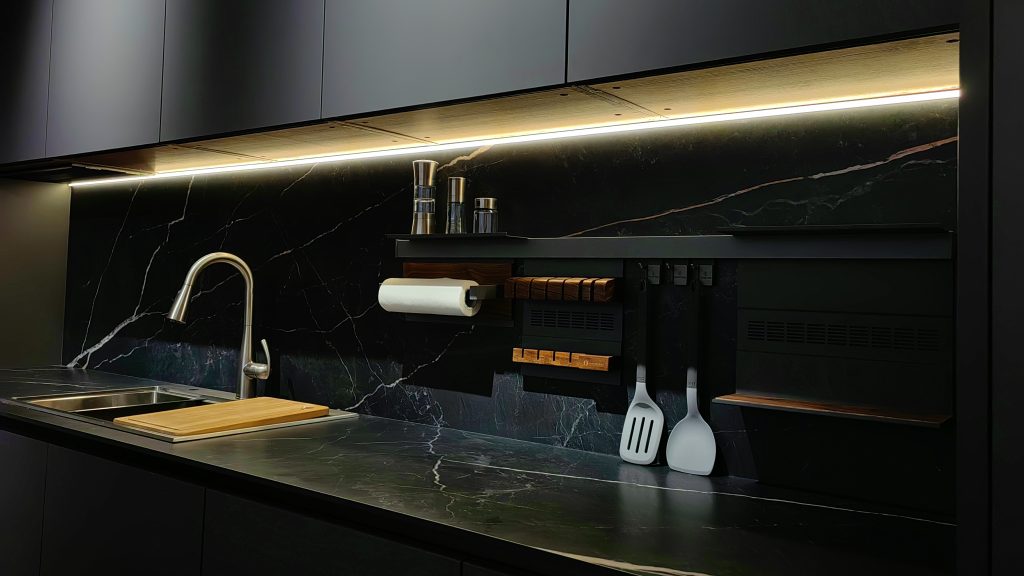
Curved Corner LED Profiles: A Softer Appearance
Curved corner LED profiles feature a rounded or curved visible diffuser. Compared with a more angular profile, the curved surface creates a softer-looking lighting line that may integrate more naturally into furniture details and architectural corners.
They can be considered for wardrobe interiors, furniture corners, wall-to-ceiling junctions and decorative lighting around larger structures.
However, the final lighting effect depends on the profile’s cross-section, installation orientation and LED strip position. A curved diffuser does not automatically guarantee indirect lighting or eliminate glare.
Compact Curved Profiles: 16 × 16 mm
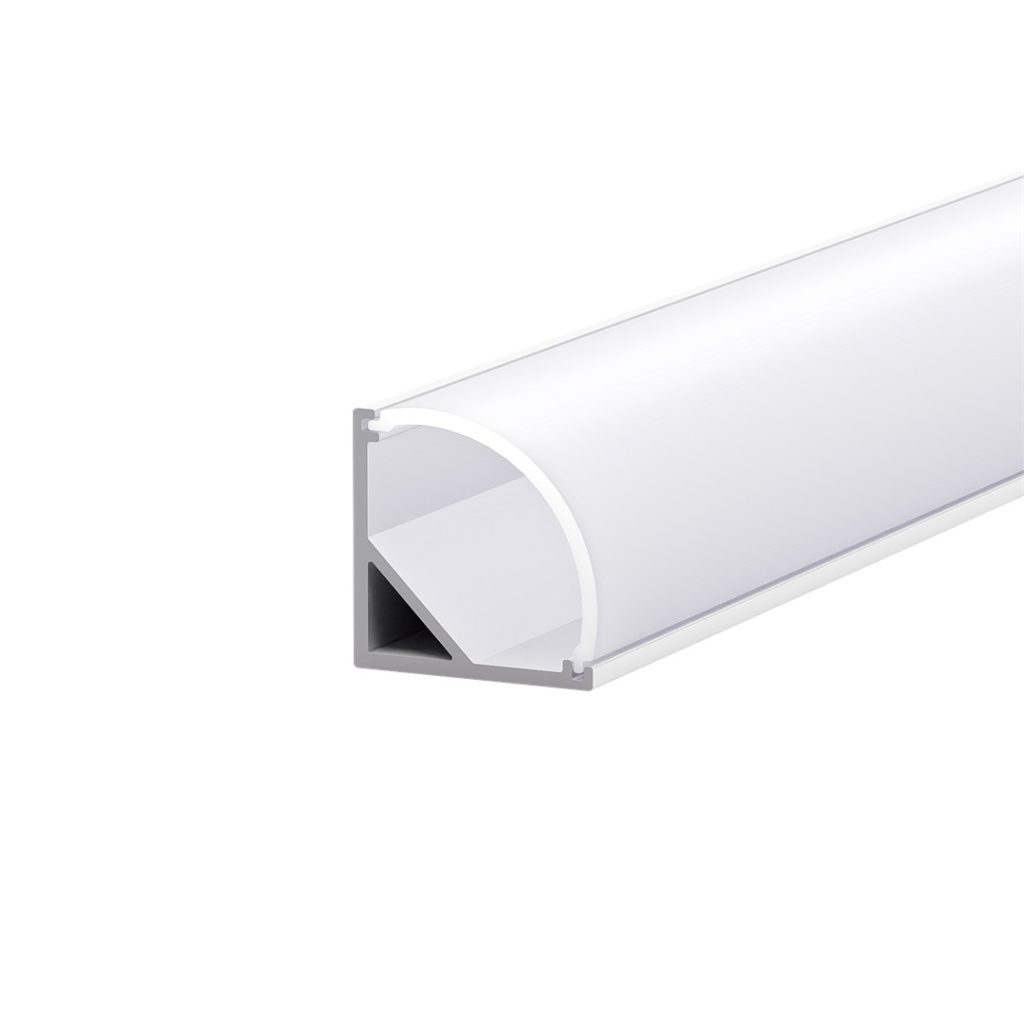
A compact curved profile is useful when installation space is limited and a relatively small lighting element is preferred.
Potential applications include:
- Furniture and wardrobe corners
- Shelf and cabinet details
- Wall corners and selected ceiling junctions
- Decorative lighting around curtain pelmets, where the available space and light direction are suitable
For a profile with a nominal internal width of 10 mm, an 8 mm single-row LED strip is a practical starting point, subject to checking the actual PCB width, solder pads, connectors and diffuser clearance.
The main advantage of this format is its compact size. It is worth considering when a larger profile would be visually intrusive or difficult to accommodate.
Large Curved Profiles: 30 × 30 mm
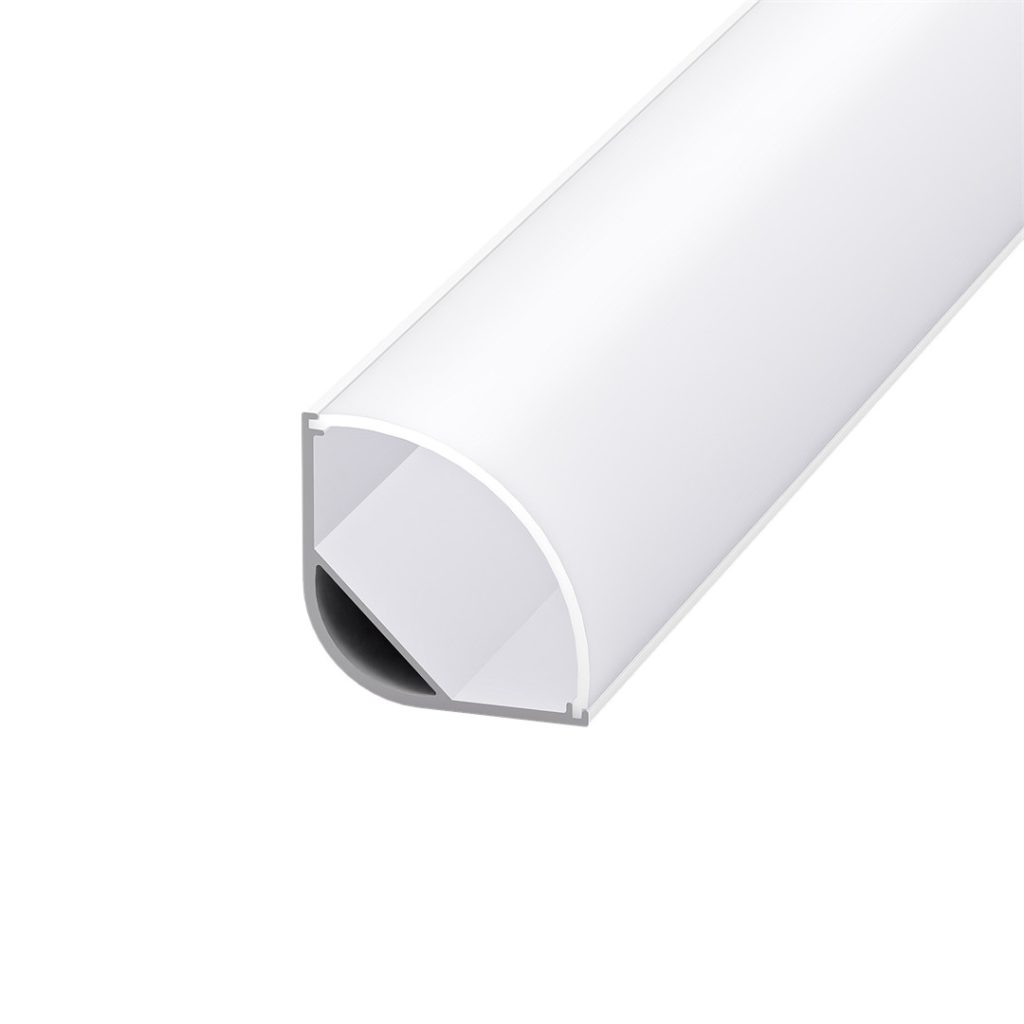
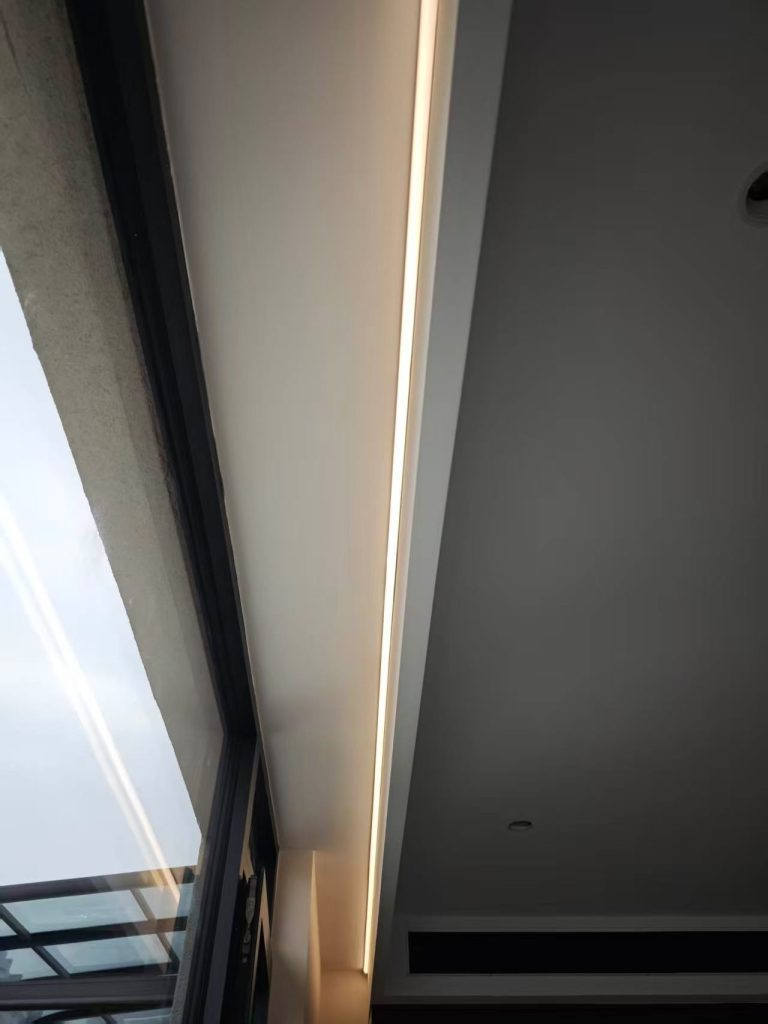
A larger curved corner profile provides more physical space for the LED strip and diffuser assembly.
It may suit feature walls, larger furniture installations, commercial interiors and selected wall-to-ceiling lighting details where a more substantial profile is acceptable.
Where the usable internal width is approximately 20 mm, wider LED strips or double-row arrangements may be possible. However, the strip width alone does not determine compatibility. The diffuser clearance, LED height, thermal requirements and mounting orientation must also be checked.
Choose a larger curved profile when the installation requires a larger lighting element or a wider source, rather than assuming that a larger profile will always produce better light.
Square Corner LED Profiles: A More Geometric Look
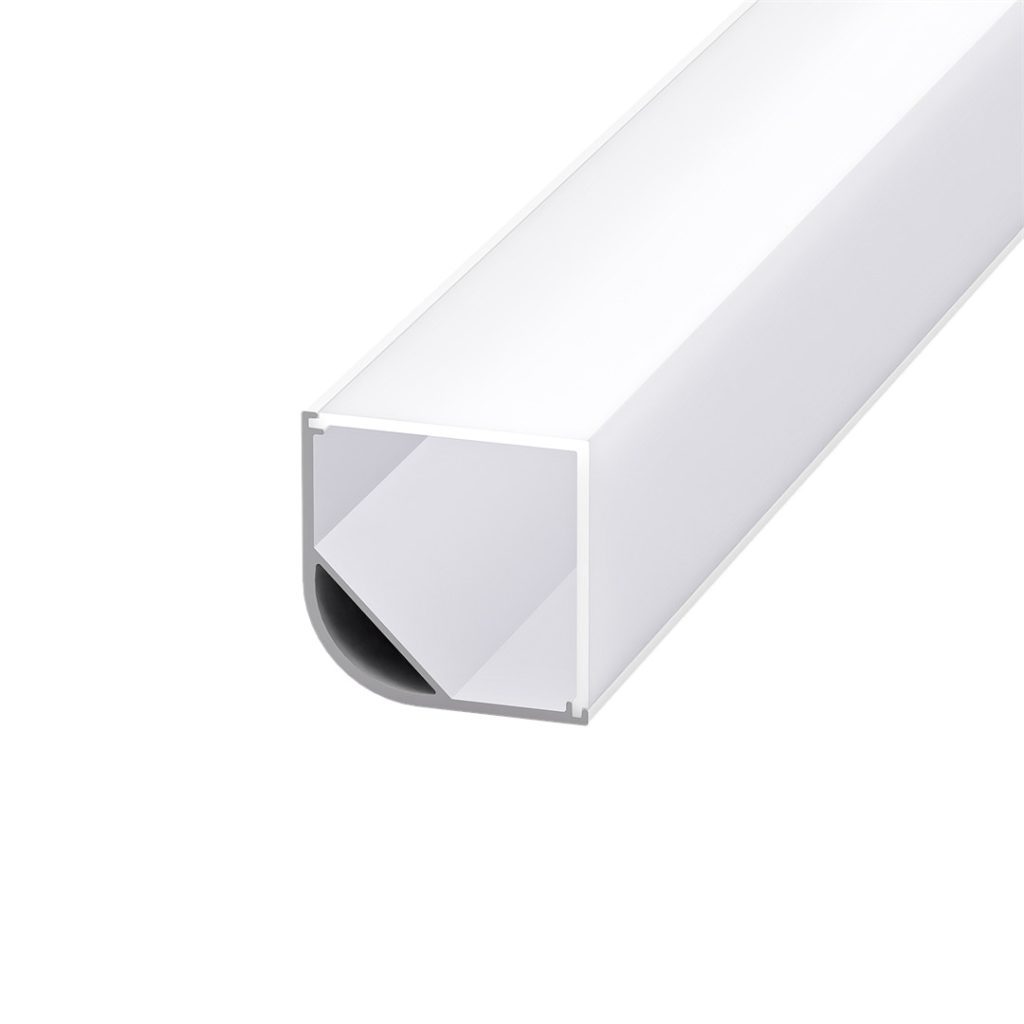
Square corner profiles have a more defined geometric appearance than curved designs. They can work well in contemporary interiors, display installations and architectural details where straight lines and clearly defined edges are preferred.
Potential applications include:
- Display cabinets and retail fixtures
- Architectural trim and selected vertical corners
- Commercial interiors and decorative furniture details
- Linear accent lighting where a more geometric profile is desired
A square profile can provide a different visual result from a curved one, even when the overall dimensions are similar. The choice is primarily aesthetic and spatial: consider how the profile will look alongside the surrounding cabinet, wall or ceiling.
A nominal 30 × 30 mm profile may offer room for wider LED strips, but the actual usable internal width must be confirmed from the cross-section drawing before specifying a double-row strip.
Square and curved profiles should therefore be compared by their actual dimensions, diffuser geometry and intended installation—not just by their outside measurements.
Flat or Angular Corner Profiles: When Light Direction Matters
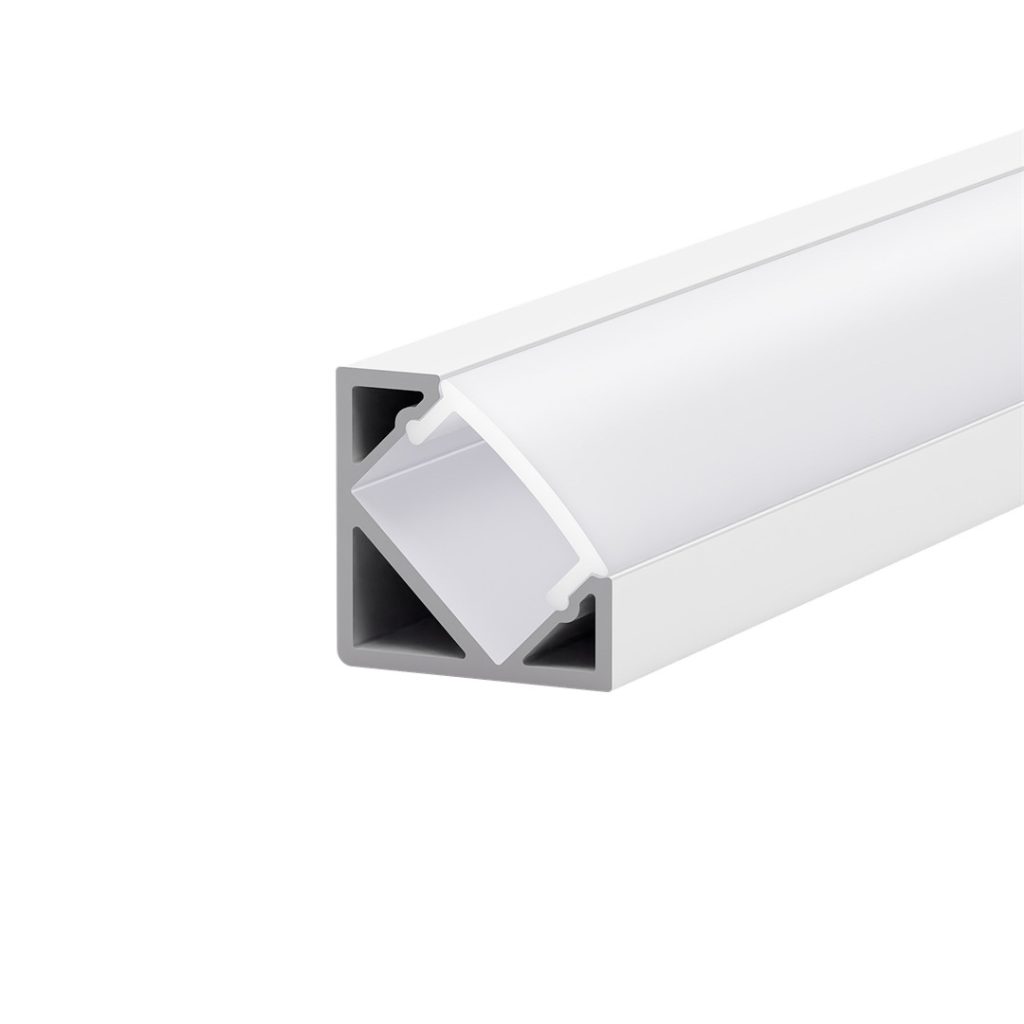
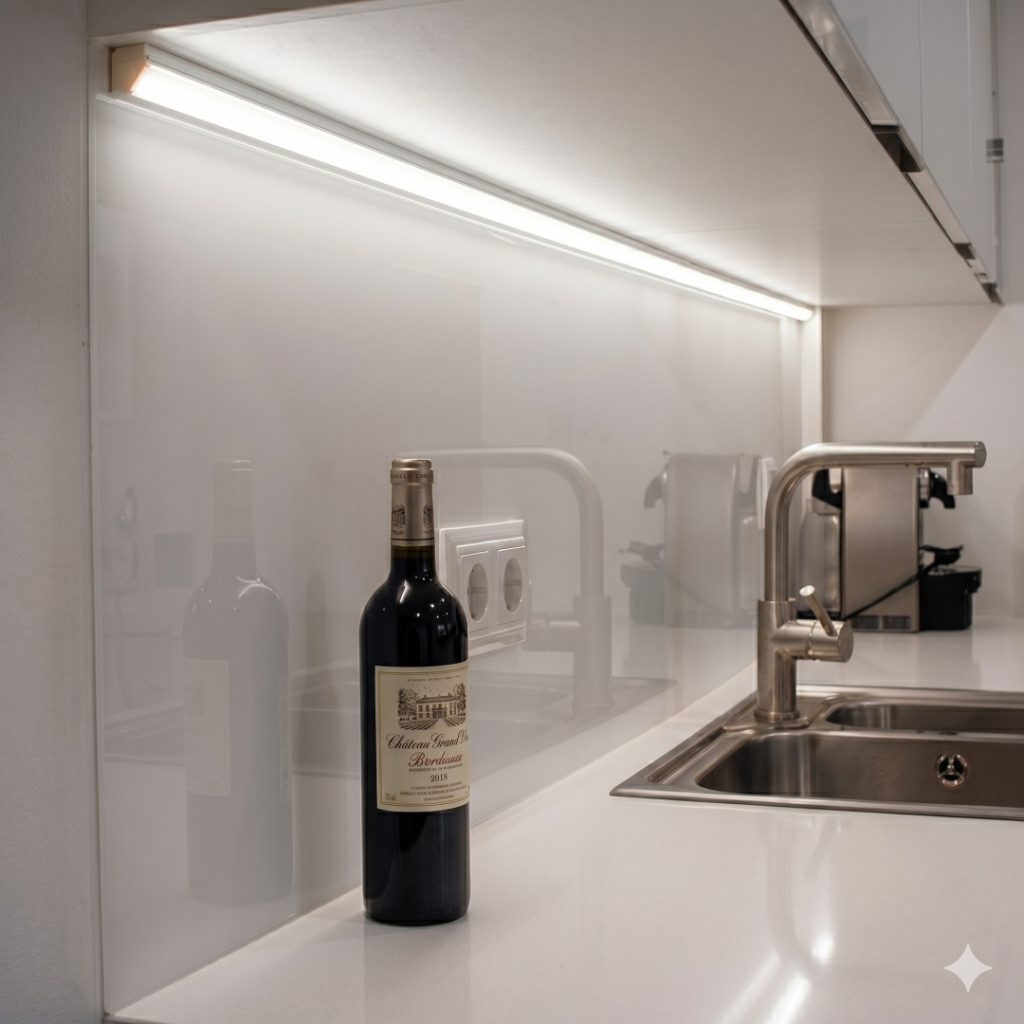
A corner profile with a flatter visible diffuser or angular light-emitting face offers a different appearance from a rounded diffuser.
This type of profile may be useful for under-cabinet lighting, shelves, wardrobes and display cabinets where the direction of the light is an important part of the design.
For example, under-cabinet lighting often needs to illuminate a worktop or nearby surface. The profile should be positioned so that the emitted light reaches the intended area while limiting direct glare from normal viewing positions.
A compact angular profile measuring approximately 18.4 × 18.4 mm, with a nominal internal width of 14 mm, may accommodate an 8 mm single-row strip. Wider strips, such as 10–12 mm versions, should only be considered after checking the actual cross-section and clearance.
Before choosing an angular profile, ask:
- Does the light need to illuminate a work surface, a display or a decorative feature?
- Will the diffuser be directly visible to people in the room?
- Can the profile be mounted in the required orientation?
- Is there enough clearance for the LED strip?
The shape of the diffuser influences the visible lighting effect, but the actual beam direction also depends on the LED strip, diffuser material, profile orientation and surrounding surfaces.
Recessed 45-Degree LED Profiles: Compact, Directional Lighting
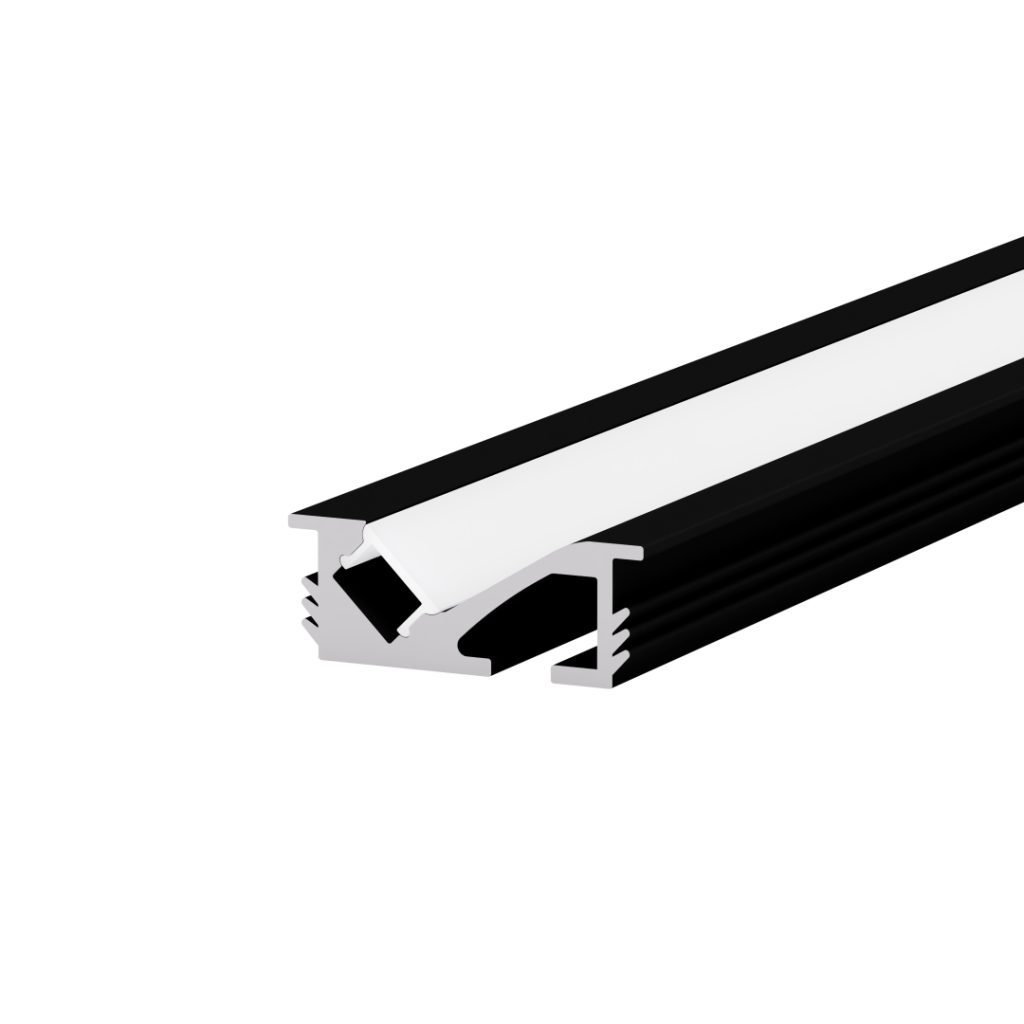
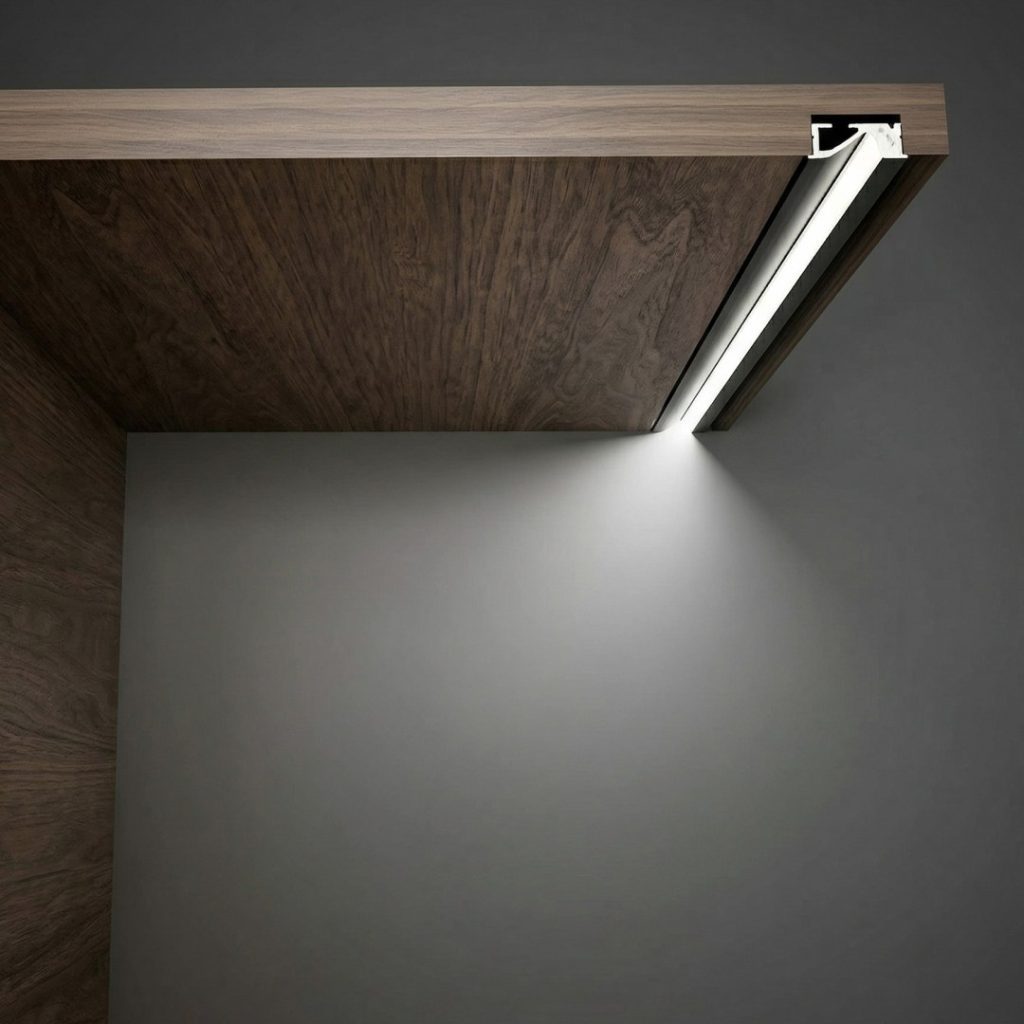
A recessed angled LED profile is different from a conventional surface-mounted corner profile.
Instead of attaching the entire profile visibly to a surface, a recessed design is intended to sit within a prepared slot or recess. Its angled light-emitting face can direct light toward a nearby surface while keeping more of the profile concealed.
Potential applications include cabinet details, shelf edges and installations where a compact profile with a defined light direction is needed.
For a narrow recessed angled profile measuring approximately 23.7 × 8 mm, with an estimated internal width of 5.42 mm, a 5 mm single-row LED strip is the more appropriate starting point. The internal width should be verified against the production drawing before confirming compatibility.
An 8 mm strip should not be specified for this profile unless the actual usable width and construction clearly permit it.
Recessed installation also requires attention to the slot dimensions, substrate material, mounting method and edge finish. A profile that fits inside a cabinet may not be suitable for every wall or ceiling construction.
For this reason, recessed angled profiles are best selected when both the installation detail and the desired light direction are understood before installation begins.
What LED Strip Width Fits a Corner Profile?
The outside dimensions of an aluminum profile do not tell you how wide an LED strip it can accommodate. The usable internal width is the more relevant measurement.
The following table provides an initial selection guide for the profile formats discussed in this article.
| Corner profile format | Nominal internal width | Suggested LED strip |
|---|---|---|
| Compact curved, 16 × 16 mm | 10 mm | 8 mm single-row strip |
| Angular, 18.4 × 18.4 mm | 14 mm | 8 mm strip; evaluate 10–12 mm only after checking clearance |
| Large curved, 30 × 30 mm | 20 mm | Wider LED strips may be suitable, depending on the actual usable width and diffuser clearance. |
| Large square, 30 × 30 mm | 20 mm | Wider LED strips may be suitable, depending on the actual usable width and diffuser clearance. |
| Recessed angled, 23.7 × 8 mm | Approximately 5.4 mm | 5 mm single-row strip, subject to verification |
These are preliminary selection recommendations, not a guarantee that every strip of the stated width will fit.
The actual PCB width, solder pads, waterproof coating, connectors and diffuser clearance can all affect compatibility. LED strip power and thermal performance must also be checked separately from physical fit.
For OEM projects, it is advisable to confirm the strip specification and profile cross-section together before approving samples or production.
How to Choose the Right Corner LED Profile
Before selecting a profile, consider the following questions.
1. What visual effect do you want?
Choose a curved diffuser when a softer-looking lighting line is preferred. Consider a square or flatter angular design when a more defined geometric appearance is required.
2. Where will the profile be installed?
Furniture corners, cabinet undersides, shelf edges and wall-to-ceiling junctions have different space and mounting requirements. Confirm the intended position and orientation rather than choosing by appearance alone.
3. Which surface should the light illuminate?
For worktops and displays, consider the direction of the emitted light and the potential for glare. For decorative lighting, consider how the light interacts with nearby walls, ceilings and furniture.
4. What LED strip will be used?
Check the usable internal width, diffuser clearance and LED height. Do not assume that a wider external profile automatically supports every wider or double-row LED strip.
5. How will the profile be mounted?
Surface-mounted and recessed profiles require different preparation and fixing methods. Check the mounting accessories and substrate requirements before specifying the product.
6. Are there thermal or OEM requirements?
For higher-power LED strips or customized lighting assemblies, review the aluminum cross-section, thermal contact, operating conditions and mounting design. A profile that fits the strip physically is not necessarily suitable for every power level.
Need a Custom LED Corner Profile for Your Project?
Standard corner profiles are suitable for many lighting applications, but some projects require a specific width, diffuser shape, mounting arrangement or finish.
For lighting brands, distributors and OEM buyers, a custom aluminum extrusion may be worth considering when standard products cannot meet the installation requirements.
When discussing a custom profile, prepare the following information:
- Required profile dimensions and cross-section drawing, if available
- LED strip width, height and power per meter
- Desired diffuser material and appearance
- Surface-mounted or recessed installation requirements
- Required finish, color and project quantity
Sharing these details early makes it easier to assess profile feasibility, strip compatibility, tooling requirements and sample development.
Contact LEDLINEA to discuss standard corner profiles or a customized aluminum profile for your lighting application.
Frequently Asked Questions
What is the difference between a curved and a square LED corner profile?
A curved profile has a rounded visible diffuser, while a square profile provides a more geometric appearance. The better option depends on the desired visual effect, available installation space and the profile’s actual light-emitting geometry.
Are 45-degree LED profiles suitable for under-cabinet lighting?
They can be suitable when the mounting position and light direction are appropriate for the work surface. Check the profile orientation, strip compatibility and potential glare before installation.
Can a 30 × 30 mm corner profile accommodate a double-row LED strip?
Possibly, but the outside dimensions alone are not enough to confirm compatibility. The usable internal width, diffuser clearance, LED height and thermal requirements must be verified.
Can corner LED profiles be recessed into a wall or cabinet?
Some profiles are designed for recessed installation, while others are surface-mounted. Confirm the specified mounting method and the dimensions of the required recess before installation.
How do I choose the correct LED strip width?
Compare the LED strip’s actual PCB width with the usable internal width of the profile. Also allow for solder pads, connectors, protective coatings and clearance beneath the diffuser.
Can LED aluminum corner profiles be customized for OEM projects?
Custom extrusion may be possible when a project requires specific dimensions, mounting features, finishes or diffuser configurations. Feasibility depends on the design, tooling, quantity and manufacturing requirements.