
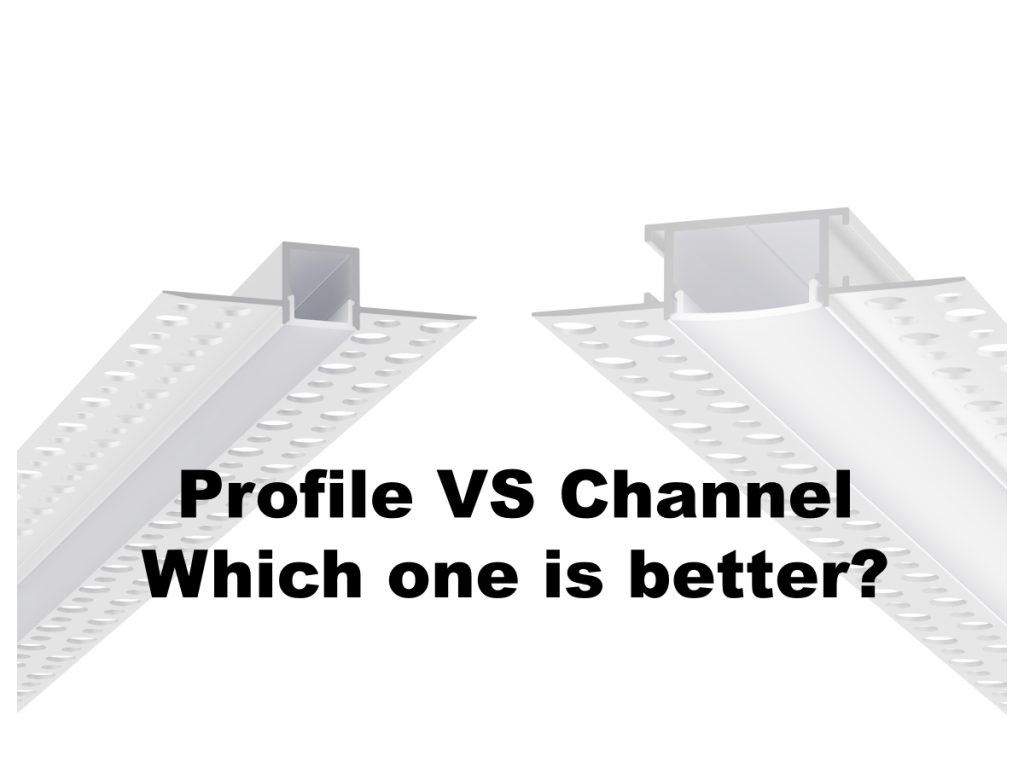
When sourcing LED strip lighting components, buyers often see different names from different suppliers:
- LED profile
- LED channel
- LED extrusion
- Aluminum LED channel
- LED strip profile
This can create confusion.
Are these different products?
Or are they simply different names for the same solution?
In most cases, LED profile and LED channel refer to the same type of aluminum housing designed for LED strip lights.
The difference is mainly related to terminology, regional preference, and industry usage — not the basic product function.
What Is an LED Profile?
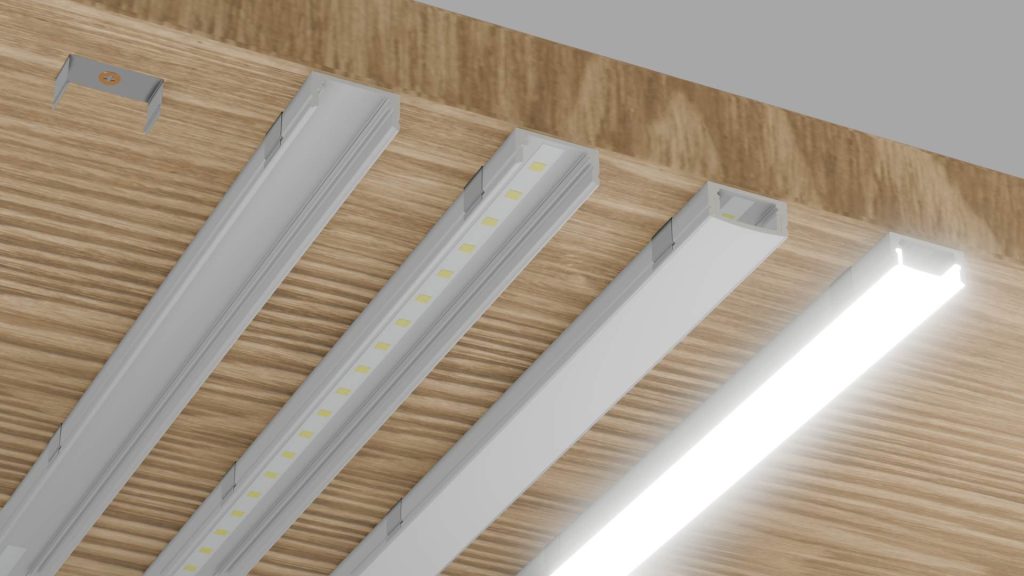
An LED profile is an aluminum extrusion designed to hold an LED strip and create a complete linear lighting system.
A typical LED profile includes:
- Aluminum housing
- LED strip mounting area
- Diffuser cover
- Mounting clips
- End caps
The aluminum body provides structural support and helps transfer heat away from the LED strip. For more information about why aluminum profiles are widely used in professional lighting applications, see our guide on why professional LED lighting projects use aluminum profiles.
The diffuser controls the appearance of the light by reducing glare and helping create a smoother light line.
A complete LED profile system can be used for:
- Cabinet lighting
- Architectural lighting
- Recessed lighting
- Indirect lighting
- Display lighting
- Furniture applications
What Is an LED Channel?
An LED channel is another commonly used term for an aluminum housing that contains an LED strip.
The word “channel” is especially common in North America and online retail markets.
For example, buyers may search for:
- LED channel
- LED strip channel
- Aluminum LED channel
while manufacturers and architectural lighting suppliers may use:
- LED profile
- LED aluminum profile
- LED extrusion
In many cases, these terms describe the same product category.
LED Profile vs LED Channel: Is There Any Difference?
Short answer:
Usually, no.
An LED profile and an LED channel generally describe the same aluminum extrusion system.
The difference is mainly the terminology used by different markets.
| Term | Common Usage |
|---|---|
| LED Profile | Europe, architectural lighting, professional projects |
| LED Channel | North America, retail, online searches |
| LED Extrusion | Manufacturing and engineering terminology |
| Aluminum LED Profile | More complete product description |
However, when selecting a product, the name itself is not the most important factor.
The actual specifications matter more.
Why Do Suppliers Use Different Names?
Regional terminology
Different markets developed different preferences.
For example:
European lighting companies often use:
LED profile
North American suppliers often use:
LED channel
Both can describe an aluminum housing for LED strips.
Different industries use different language
Architectural lighting designers may specify:
recessed LED profile
Furniture manufacturers may search:
LED channel for cabinet lighting
Factories may refer to:
aluminum extrusion profile
The product application changes the vocabulary.
Marketing and search behavior
Suppliers often choose the terminology their customers are familiar with.
A contractor searching online may type:
LED channel
A lighting designer may search:
LED profile
Both searches can lead to similar products.
What Should You Compare Instead of the Name?
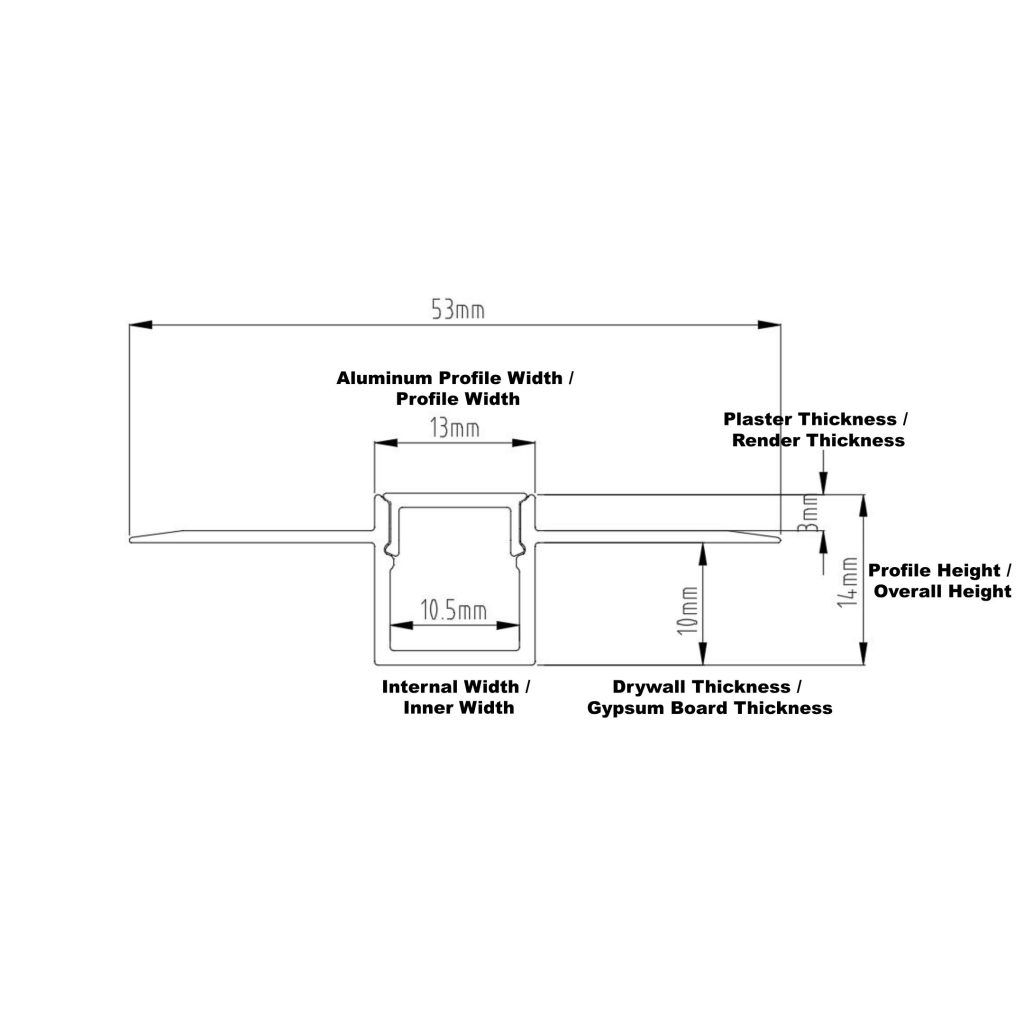
Choosing an LED profile or LED channel should not be based only on the product name. The important factors are the technical specifications and installation requirements.
| Factor | Why It Matters | What to Check |
|---|---|---|
| Profile Size | Determines heat dissipation, installation space, and light diffusion performance | Width, height, internal channel size, aluminum thickness |
| LED Strip Compatibility | Ensures the LED strip fits correctly inside the profile | Strip width, PCB thickness, connector clearance |
| Profile Depth | Affects light uniformity and hotspot reduction | Distance between LED strip and diffuser |
| Diffuser Type | Changes brightness, glare control, and final appearance | Clear, frosted, or opal diffuser options |
| Installation Method | Determines whether the profile fits the project design | Surface mounted, recessed, corner, plaster-in |
| Aluminum Construction | Influences durability and thermal performance | Aluminum thickness, extrusion quality, finish |
| Environmental Requirements | Important for long-term reliability | Indoor/outdoor use, moisture exposure, IP requirements |
Choosing the correct dimensions is especially important for high-power LED strips and applications requiring a smooth light line. See our guide on how to choose the right LED aluminum profile size for your LED strip.
Common Mistakes When Ordering LED Profiles
Instead of comparing only the product name, buyers should avoid these common mistakes:
| Common Mistake | Why It Causes Problems | Better Approach |
|---|---|---|
| Choosing only by appearance | A slim profile may not provide enough space for heat management or light diffusion | Select the profile based on LED strip power and installation requirements |
| Ignoring diffuser performance | Different diffusers affect brightness, glare, and LED dot visibility | Choose diffuser type according to the desired lighting effect |
| Selecting the wrong profile size | The LED strip may not fit, or the light may appear uneven | Check strip width and profile dimensions before ordering |
| Comparing only price | Lower-cost profiles may use thinner aluminum or lower-quality accessories | Compare specifications, materials, and complete system quality |
LED Profile or LED Channel: Which One Should You Choose?
In most cases, you are not choosing between two different products.
You are choosing the right aluminum housing based on your project requirements.
For example:
| Application | Recommended Consideration |
|---|---|
| Cabinet lighting | Slim surface-mounted profile |
| Architectural lighting | Recessed or plaster-in profile |
| Visible light lines | Deeper profile with diffuser |
| High-power LED strips | Larger aluminum profile |
| Outdoor or humid areas | Suitable sealed solution |
The correct choice depends on:
- installation location
- LED strip type
- required light quality
- environmental conditions
Conclusion
LED profile and LED channel are usually two names for the same type of aluminum housing used with LED strip lighting.
The terminology may change depending on the region or industry, but the important factors remain the same:
- Profile dimensions
- Aluminum construction
- LED strip compatibility
- Diffuser performance
- Installation requirements
When selecting an LED lighting solution, focus less on the name and more on whether the profile matches the technical requirements of the project.
For custom LED aluminum profile requirements, LEDLINEA provides professional support for project-based applications and small quantity evaluation orders.
Need LED Profiles for Your Application?
LEDLINEA supplies aluminum LED profiles for:
- Cabinet lighting
- Architectural and commercial lighting
- Recessed and trimless lighting
- Indirect and cove lighting
- Stair and floor lighting
- Wall washer lighting
For small quantity evaluation and product testing:
Visit LEDLINEA Shop:👉 [Insert Link: https://shop.ledlinea.com/]
For custom requirements, larger quantities and professional support:
Contact LEDLINEA:👉 [Insert Link: https://ledlinea.com/contact-us/]