Under-cabinet lighting is not simply a matter of choosing an LED strip. The aluminum profile affects how the light is directed, how the installation looks, and how much space is required inside or beneath the cabinet.
For kitchen cabinets, shelving and furniture lighting, three common options are surface-mounted profiles, recessed profiles and 45-degree profiles.
Each serves a different purpose. The right choice depends on the cabinet construction, the required lighting effect and the space available for installation.
Surface-Mounted LED Profiles: Simple Installation with Flexible Lighting Options
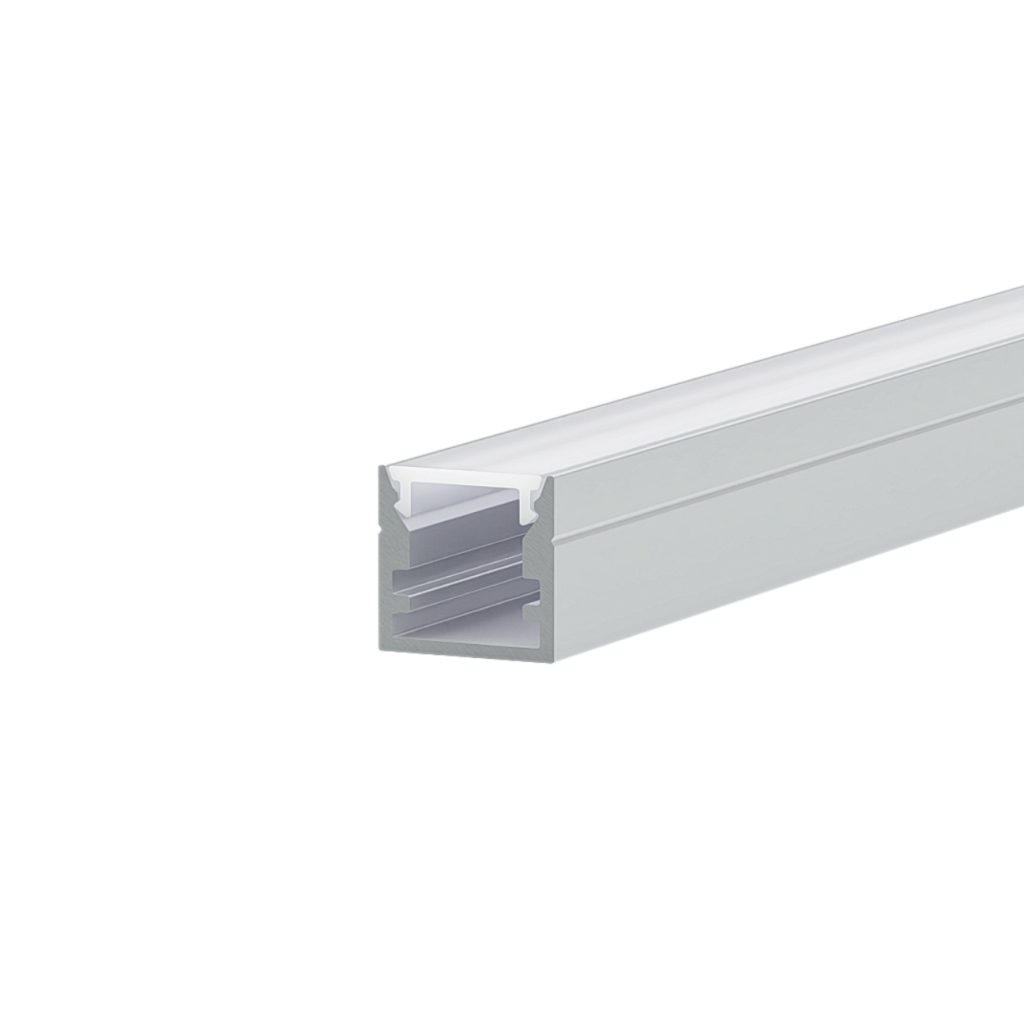
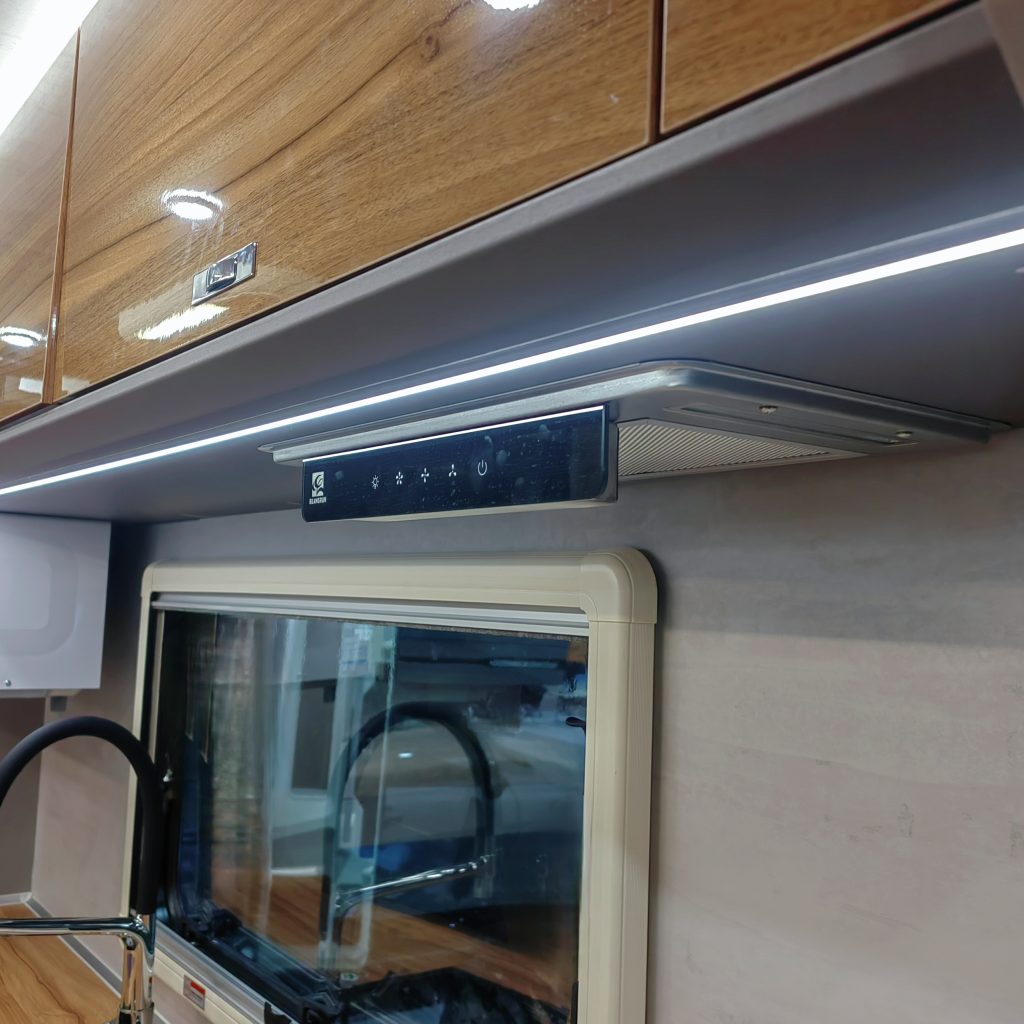
Surface-mounted LED profiles are installed directly onto the underside of a cabinet or shelf. They are a practical choice when routing a groove is not possible or when lighting needs to be added to existing furniture.
Because the aluminum housing remains visible, the profile dimensions should match both the cabinet design and the required lighting performance.
For under-cabinet applications, two common size directions are:
- 17 × 8 mm: A compact profile size for installations where space is limited. The shallow internal height works well with high-density SMD LED strips or COB LED strips, where the LED spacing is already optimized to reduce visible light points.
- 17 × 15 mm: A deeper profile that provides more distance between the LED strip and diffuser. The additional optical space helps improve light mixing and makes it easier to achieve a smoother, more uniform lighting appearance with less visible LED spotting.
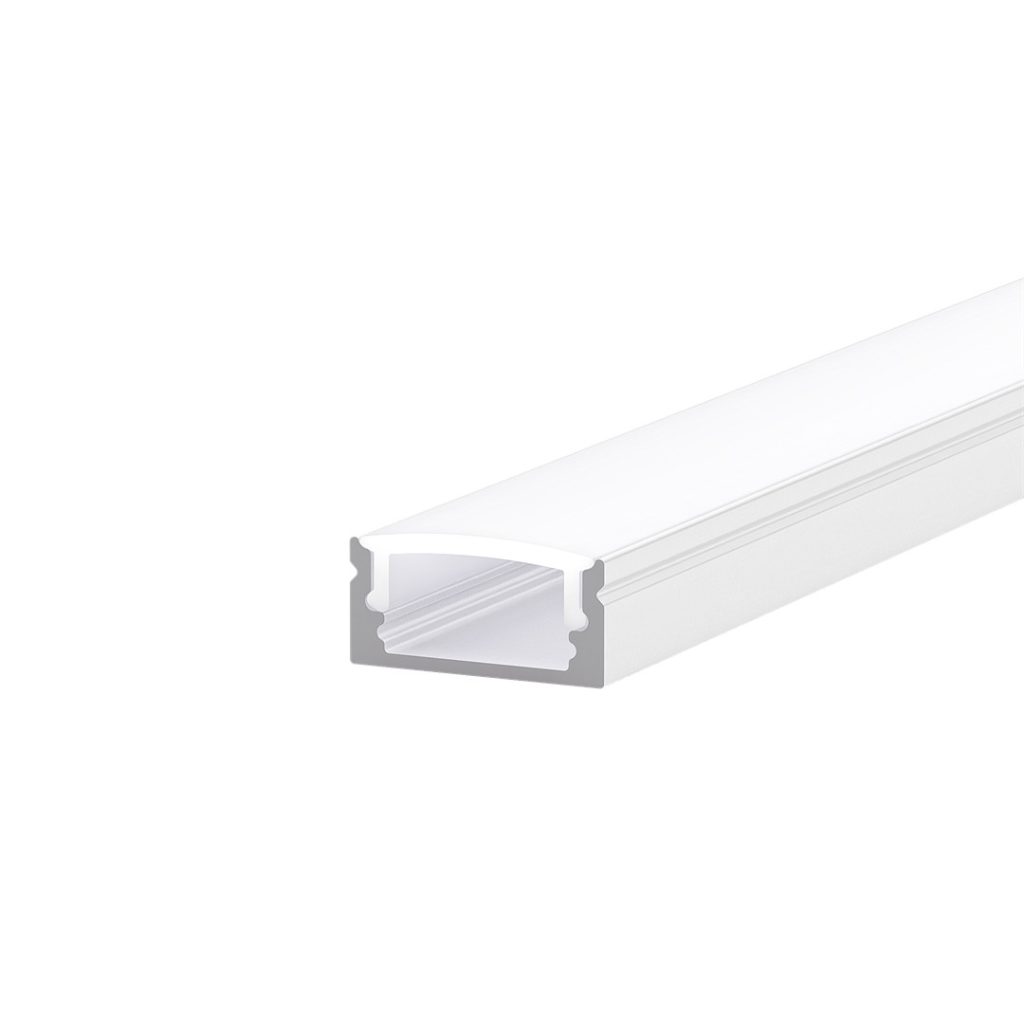
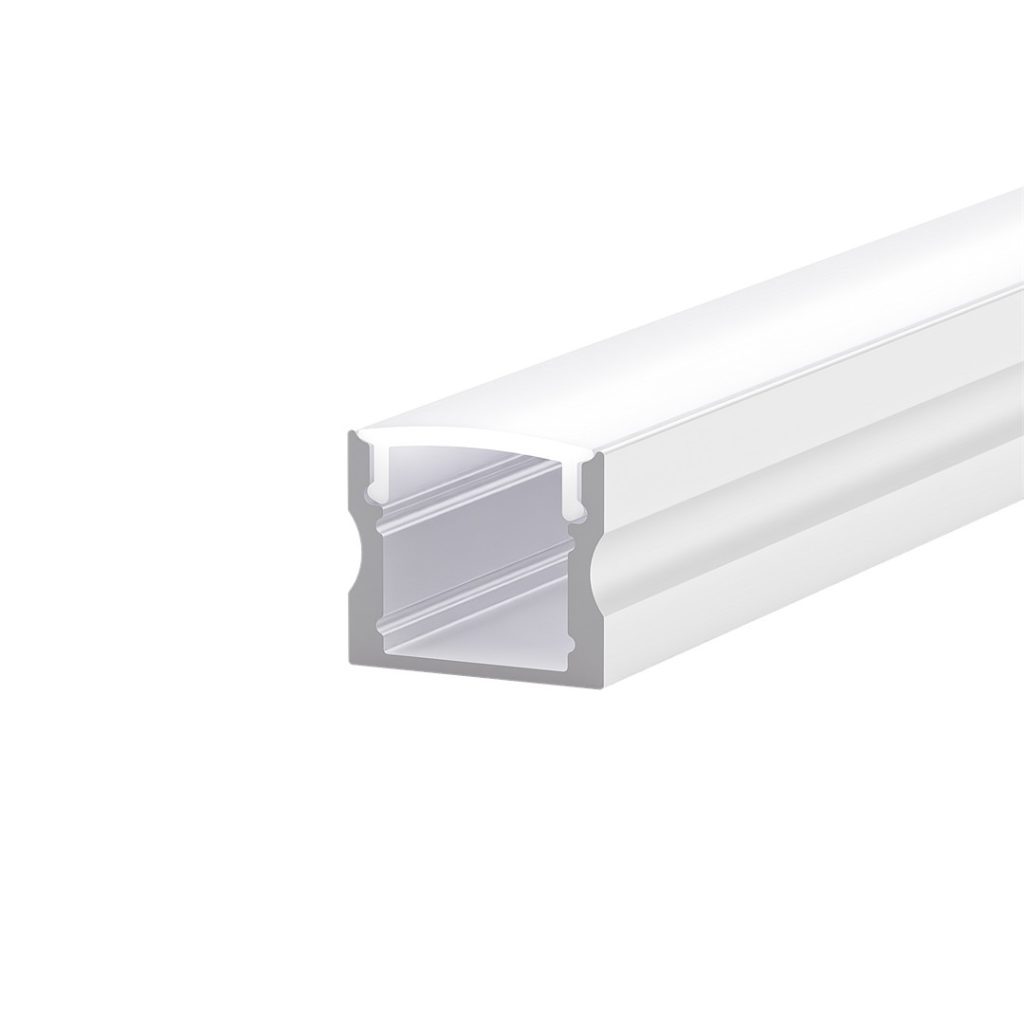
Choosing between these two sizes is not only about installation space. It also depends on the LED strip type, LED density, diffuser selection and the desired visual effect.
A smaller profile can be an excellent solution for compact cabinet lighting, while a deeper profile provides more flexibility when a continuous, dot-free appearance is required.
Recessed LED Profiles: Integrated Appearance with Better Optical Control
Recessed LED profiles are installed into a routed groove, creating a cleaner and more integrated appearance with the cabinet surface.
They are commonly used for custom cabinetry, furniture manufacturing and applications where lighting details are planned during production.
Typical recessed profile sizes include:
- 23 × 8 mm: A slim recessed solution designed for applications where installation depth is limited. It is suitable for high-density SMD LED strips or COB LED strips that already provide a continuous light source.
- 23 × 15 mm: A deeper recessed profile offering additional space between the LED strip and diffuser. This increased optical distance improves light diffusion and helps create a smoother, more uniform illumination effect.
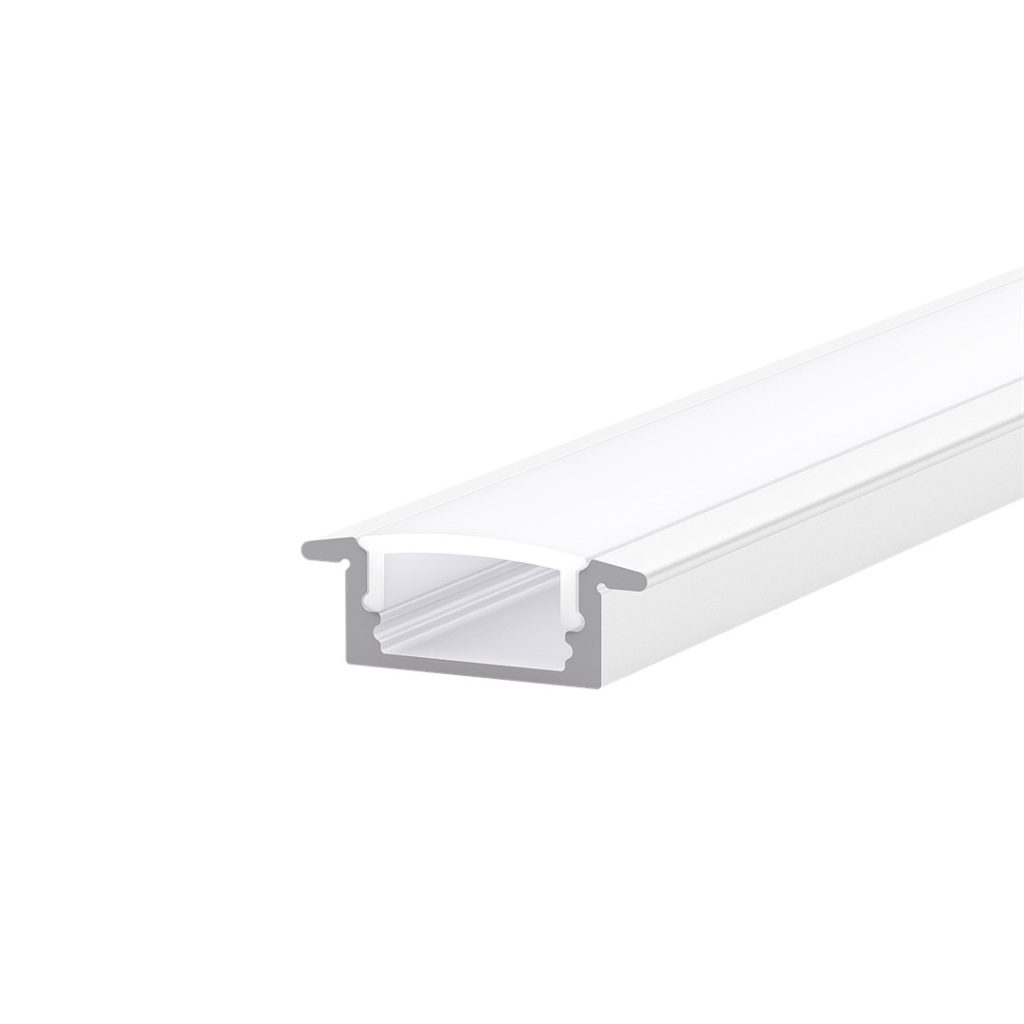
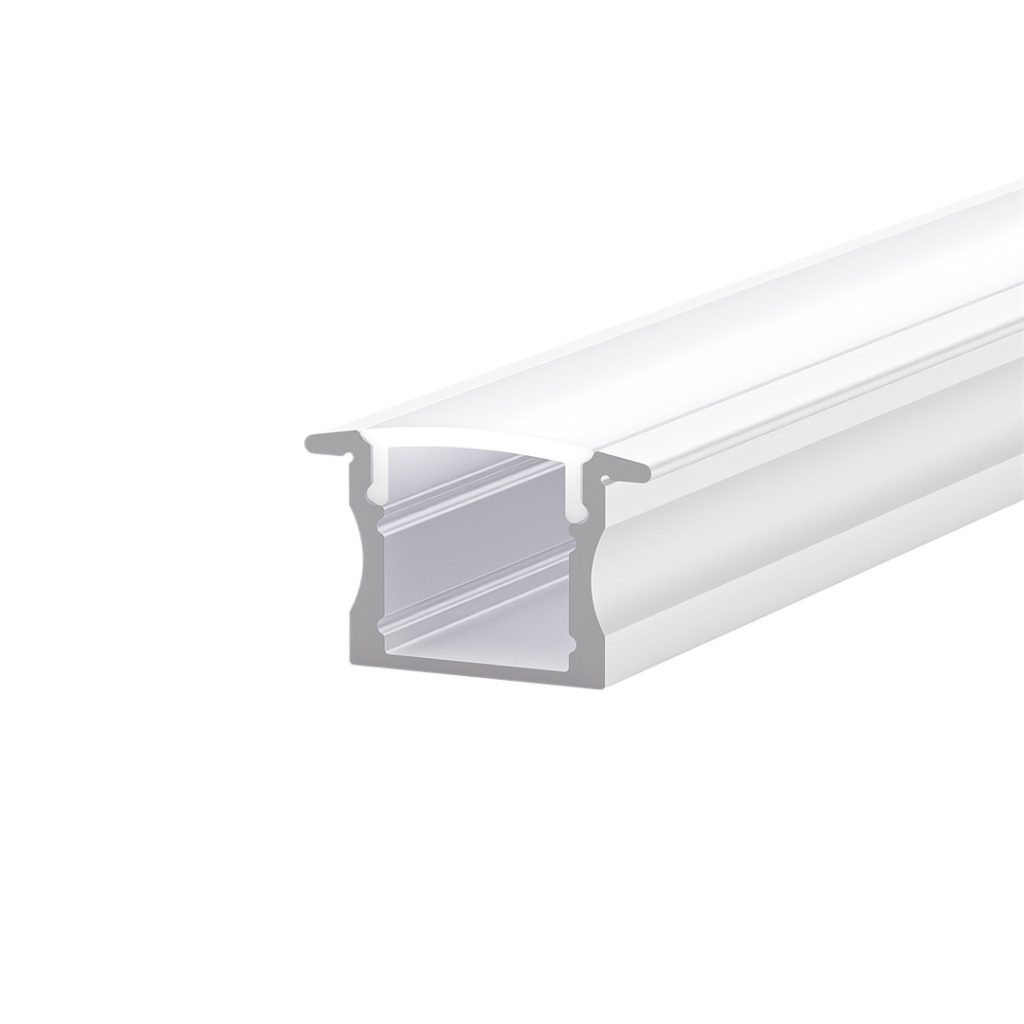
For professional lighting applications, profile height should be considered together with LED strip specifications. A deeper profile does not automatically produce more brightness, but it provides more flexibility in controlling the final appearance of the light.
Before installation, always confirm the required groove width, depth and remaining cabinet material thickness.
45-Degree LED Profiles: Control the Direction of Light
A 45-degree profile is designed to direct light at an angle rather than simply pointing it straight down from a flat surface.
This can be useful beneath kitchen cabinets, at shelf edges and in display furniture, where the light needs to reach a particular surface or avoid an undesirable viewing angle.
For example, an angled profile can direct light towards the worktop or backsplash, depending on its position and cross-sectional design.
One option to evaluate is an angled recessed profile measuring approximately 23.7 × 8 mm. Its relatively shallow overall section can be useful where both an angled light direction and limited installation depth are important.
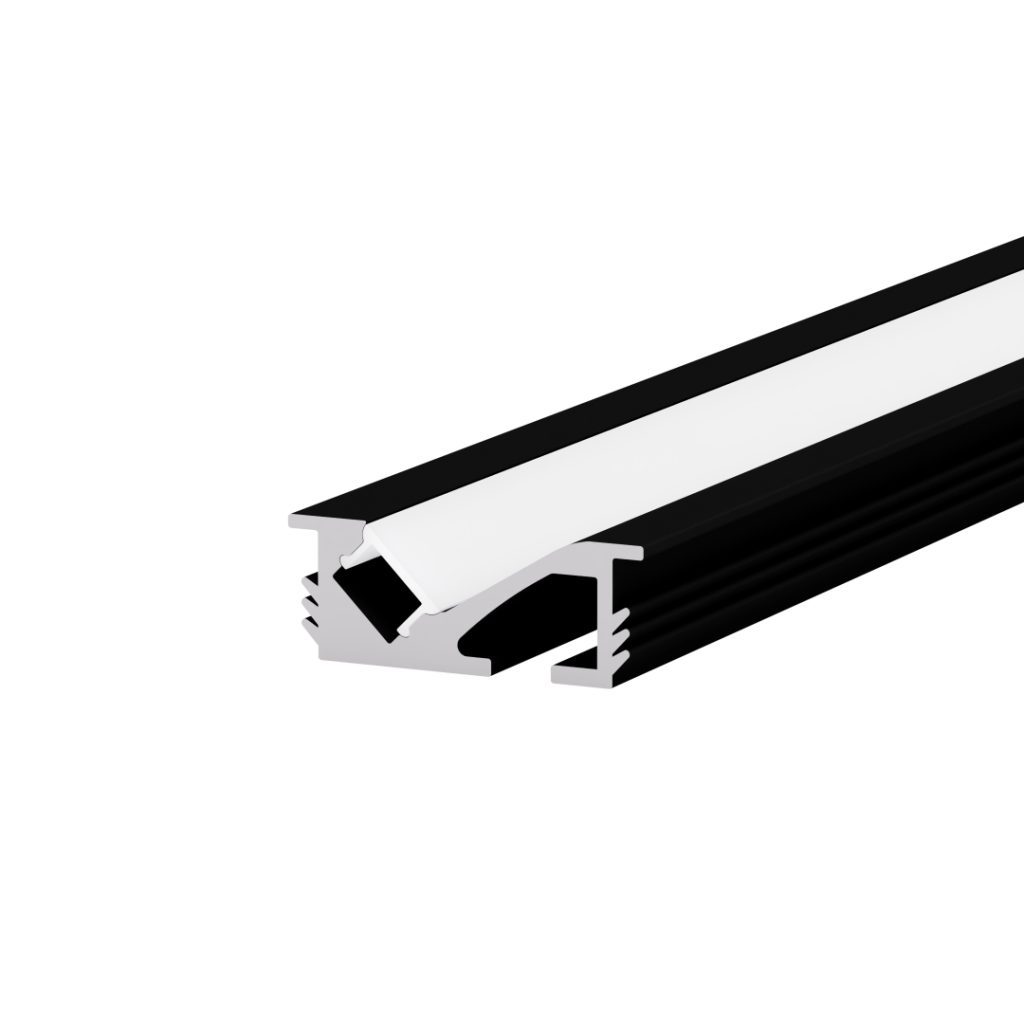
For applications where the light source needs to sit at a corner or along an angled cabinet edge, corner-style profiles around 16 × 16 mm and 18.4 × 18.4 mm offer additional geometric options.
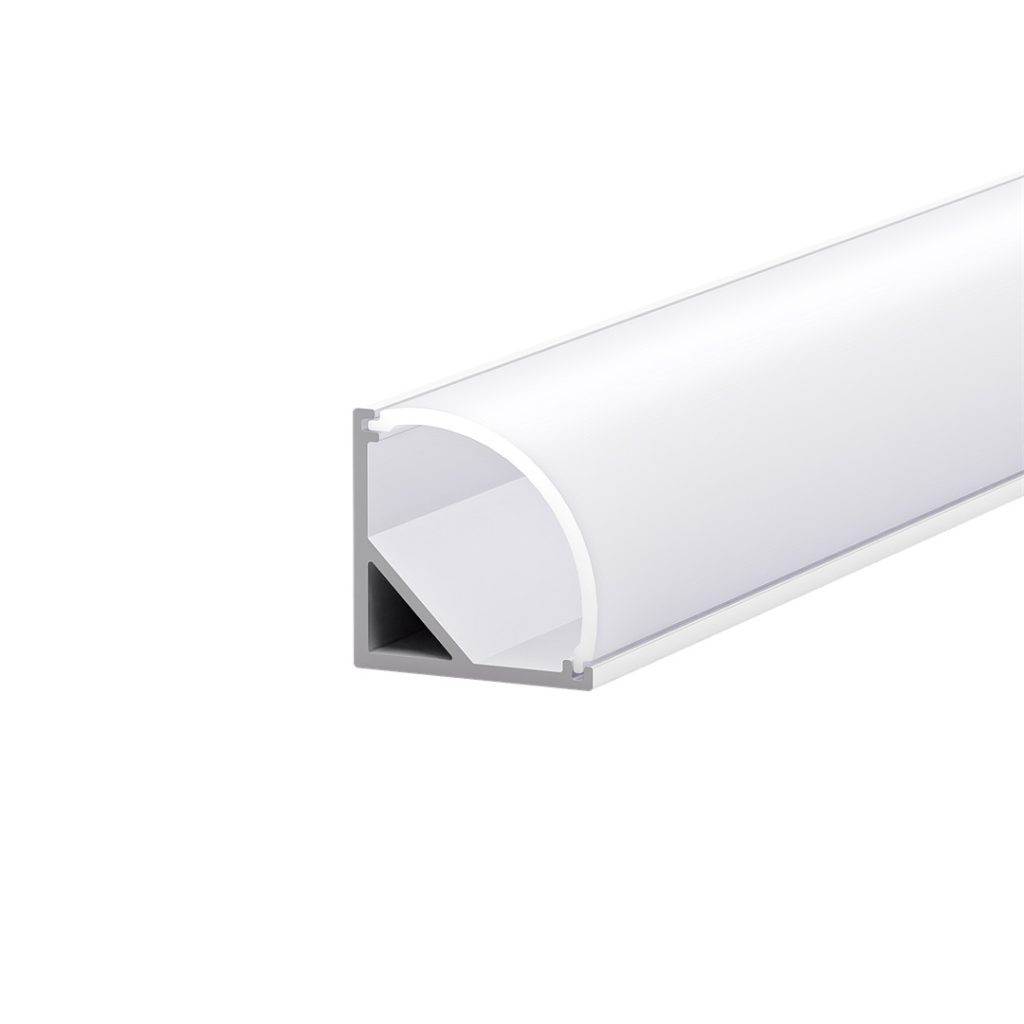
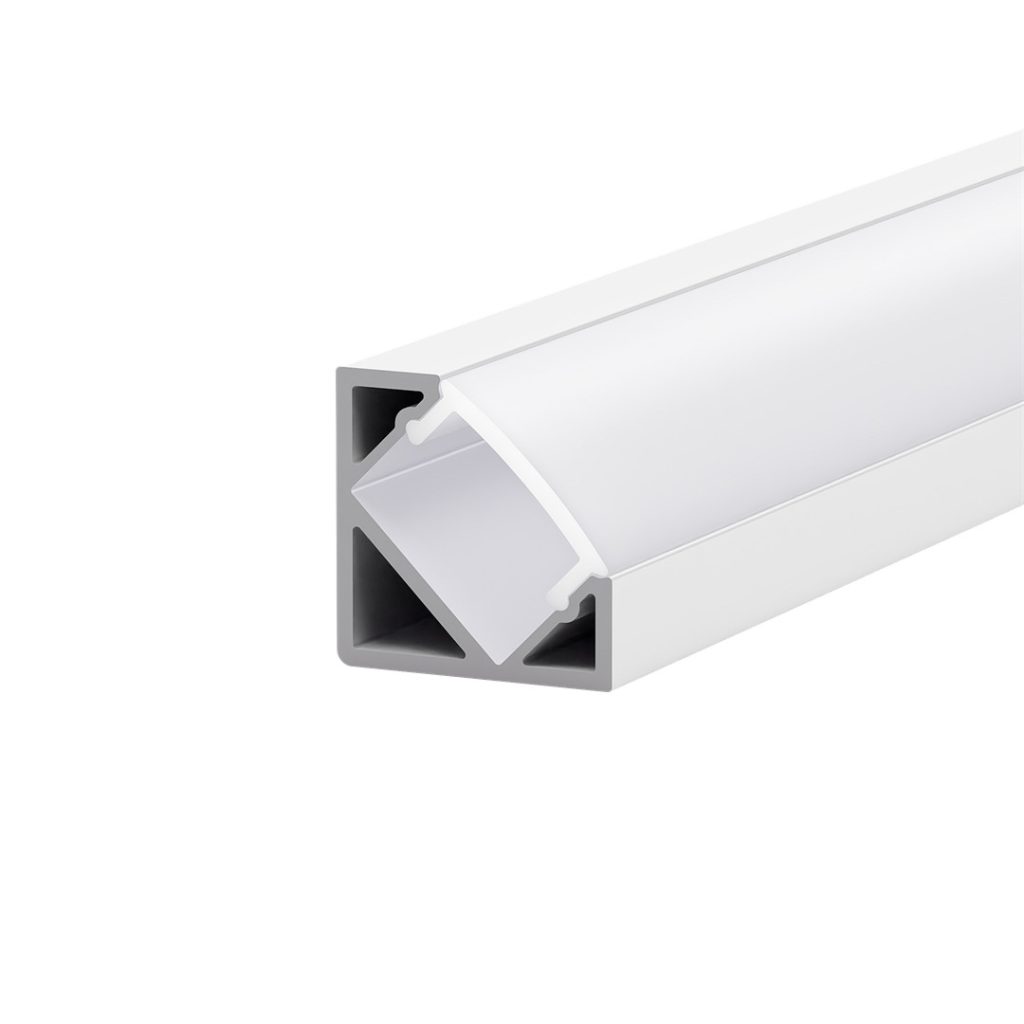
One important distinction: 45-degree describes the profile geometry or intended light direction, not necessarily the mounting method. An angled profile may be designed for recessed or surface installation, depending on its cross-section.
Before selecting one, consider the position of the LED strip, the direction of the emitted light, the viewing angle and the actual area that needs illumination.
What If the Available Space Is Extremely Narrow?
Not every cabinet or shelf can accommodate a conventional profile.
For applications with very limited space, an ultra-compact profile around 10 × 10 mm may be worth evaluating.
A smaller section can help integrate lighting into narrow edges or compact furniture details. However, reducing the overall dimensions also reduces the space available for the LED strip and diffuser.
Check the compatible strip width, internal clearance, wiring arrangement and required light output before selecting an ultra-narrow design.
The smallest profile is not always the best choice. It should fit the installation while still delivering the intended lighting effect.
How to Choose the Right Profile
The following comparison provides a practical starting point.
| Requirement | Profile to consider |
|---|---|
| Retrofitting existing cabinets | Surface-mounted |
| Clean, integrated appearance | Recessed |
| Directing light towards a worktop or backsplash | 45-degree |
| Limited installation depth | Shallow profile |
| More space between the LED strip and diffuser | Deeper profile |
| Very narrow cabinet edges | Ultra-compact profile |
These are starting points rather than universal rules. The final choice should account for the available mounting space, the required beam direction and the complete LED assembly.
Check These Details Before Ordering
LED strip compatibility: Confirm the strip width, PCB dimensions and available internal clearance.
Diffuser selection: A frosted or opal diffuser can soften the appearance of individual LEDs, but the result depends on LED spacing, optical distance and diffuser characteristics.
Installation dimensions: For recessed profiles, verify the actual groove dimensions from the technical drawing. For surface-mounted profiles, check mounting clearance and how the housing will appear from normal viewing angles.
Lighting direction: For angled profiles, confirm that the emitted light reaches the intended surface rather than creating unwanted glare or shadows.
Finish and production requirements: For a consistent product range, consider the profile finish, diffuser options, standard lengths and accessory compatibility together.
For a more detailed discussion of profile dimensions and optical distance, see our guides to LED aluminum profile sizes and why LED profile depth matters.
Conclusion
Surface-mounted, recessed and 45-degree LED profiles are not competing solutions for exactly the same installation.
Surface-mounted profiles prioritize straightforward installation. Recessed profiles offer a more integrated appearance, while 45-degree designs provide greater control over light direction.
The most suitable option is the one that fits the cabinet construction, available space, LED strip and intended lighting effect.
For brands, distributors and product teams evaluating LED aluminum profiles, comparing the cross-section, diffuser and installation details together is a practical way to narrow down the right specification.
For standard-size comparisons, product evaluation or OEM and finish requirements, contact LEDLINEA. Selected profiles are also available in small-quantity evaluation kits through the LEDLINEA Shop.